
Sunday, 27 February 2011

tommy nutter
 the great saville row tailorThe 1970s were a fascinating time in tailoring. Bespoke tailoring came increasingly under threat from the RTW garment industry, and in response, lead by Tommy Nutter chose to innovate. The 1970s were probably the last decade in which the fashionable cut was set by bespoke tailoring with the Nutter-Sexton team creating the look with the dramatically wide lapels, often with narrow concave shoulders and flared trouser bottoms. Much that looks fashion forward from this era in fact has roots in the greater tradition of tailoring, and often Edwardian or Victorian echoes can be discerned. You may not think of those '70s styled mutton chop side burns as being Victorian, because they are presented in a way that looks ridiculously fashion forward. Likewise, the safari jacket was just another form of hunting sports jacket often cut similarly to a Norfolk jacket. The safari suit was likewise the summer equivalent of something like a Norkfolk suit. While the relentless experimentation meant that a lot of wilder things failed to hit the mark, it was a decade of great character and vitality, when skilled tailors could still be found everywhere.
 The biggest development in the style of the lounge coat was the predominance of the button-two coat, with the long lapels. The popularity of this style is something that endures to this day, and is a lasting legacy of the 1970s. I also like the way three piece lounge suits were extremely common, usually matched with a very plainly cut SB waistcoat. More conservatively cut coats than the fashionable Nutter-Sexton styled ones still have fairly wide lapels and the trouser hems widened a little compared to the more closely cut uppers. Coats in general were cut clean and close to the chest, waist and shoulders
the victorian tailor


A newly-published book, courtesy of Batsford, it has 160 pages of gentlemen's Victoriana, containing 'all you need to create authentic menswear from the Victorian period'. Historically accurate patterns enable you to make a wide range of garments, including morning coats, waistcoats, frock coats, trousers, shirts and hunting clothes, all with full instructions for tailoring and construction. The book is also illustrated with contemporary fashion plates showing the essential wardrobe of a Victorian gentleman.
160 pages, you can pick one up now at Amazon, discounted to £16.99 right now.
Find out more at the Amazon website
real london
Tuesday, 18 August 1992
Thomas Albert Nutter, tailor, born Barmouth Merioneth 17 April 1943, died London 17 August 1992.
TOMMY NUTTER, the avant-garde Savile Row tailor, came to prominence in the late Sixties as a man who singlehandedly reconciled the traditions of Savile Row, laid down in the late 19th century, with the male peacock revolution of the Sixties and the often extravagant demands of his clients, the leading dandies of swinging London.
Born in Wales in 1943, Nutter spent his formative years in Edgware, north London, where his father was proprietor of a cafe catering to a clientele composed of truckdrivers, gas-fitters and builders. The family moved to Kilburn and Tommy and his brother David had a normal suburban childhood, punctuated by highly enjoyable holidays at Butlin's holiday camps. He attended the Willesden Technical College where, according to his brother, he studied plumbing.
In the early Sixties, Nutter obtained a position with Donaldson, Williams & Ward, traditional Savile Row tailors with premises in the Burlington Arcade. Here, starting as an apprentice, he absorbed the lore and the rules of the English gentleman's classical wardrobe. His seven years with the firm gave him a thoroughgoing knowledge of his craft, and a lifelong respect for its rules.
In 1968, Nutter left Donaldson Williams & Ward to found his own business, first at 35a Savile Row, later in its present handsome double-fronted premises at No 19. He was backed by clients including Cilla Black and her husband Bobby Willis, Peter Brown, then Managing Director of the Beatles' Apple Corps, also situated in Savile Row, and by the lawyer James Vallance-White.
The business was an immediate success for, like Sir Hardy Amies, a Savile Row dandy of a previous generation, Tommy Nutter produced lively, contemporary tailoring whose roots were deeply embedded in the craftsmanship and knowledge of Savile Row. Indeed, he made suits for Amies as well as for newer residents of Savile Row, and in particular the Beatles. He was proudest of the fact that, for the cover of the Beatles' album Abbey Road (1969), he dressed three out of the four (George Harrison elected to be photographed on the road-crossing in denims). Other leading dandies of the period were also his clients, including Sir Roy Strong (then Director of the National Portrait Gallery), Mick Jagger and Elton John.
Nutter also applied his craft to dressing female icons of swinging London society at the time, including Cilla Black, a close friend, and Bianca Jagger, who was much photographed at the time in a white dinner jacket with white satin facings. Nutter also made a red velvet suit for Twiggy which became a celebrated and much-copied look when she was photographed wearing it in the early Seventies.
In 1971 he was elected to the Best-Dressed List in the United States, along with the Earl of Snowdon and Hardy Amies. At the time, American Menswear magazine said of Nutter that he was 'tradition spiced with daring'.
'He never got things wrong about clothes,' said the restaurateur and bookshop-owner Stuart Grimshaw, who was a client of Tommy Nutter's from the late Sixties. 'He really knew what he was talking about. One would go in and say, 'What do I wear to go on safari in Kenya?' and Tommy would make one an absolutely correct safari suit, a proper one with all the pockets in exactly the right place.
'This knowledge extended to such minutiae as the correct wearing of half or full brogues or co-respondent shoes. He was an encyclopaedia of correct, classical male style.'
Clients from the hipper purlieus of the aristocracy, from the media, pop stars, and even aspiring teenage dandies from the East End whose ambition, in the early Seventies, was to own a Nutter suit, were drawn to Tommy Nutter not only because of his ineffable sense of style, but also because of his peculiarly ironic personality.
Andrew Lloyd Webber was a client and friend. 'He made me a lot of things when one was younger and trendier,' Lloyd Webber said. 'There was a wonderful maroon coat I remember I wore for Ascot - he was always such fun, very much part of my early life when Jesus Christ Superstar was going on - he made clothes for Tim Rice too - we were all great mates'.
Nutter was a gentle humorist who had a wide and interesting circle of friends attracted by his enthusiasm, by his gentle, self-mocking personality and his acerbic comments on the vagaries of others, always ending with the expression 'But who am I to talk?' He was a prodigious and witty correspondent and his letters to his many friends are treasured. In addition, he delighted in writing to the serious newspapers on topics as far-ranging as the correct buttoning of the suit on a statue of John F. Kennedy, to the scarcity of deckchairs in Green Park. He was always very ready to spring to the defence if his beloved Savile Row came under attack, as it so frequently did in the anarchic Sixties.
Nutter was also a firm believer in the supremacy of the English suit and of English cloth; during the Seventies and early Eighties he took part in huge international fashion shows put on by Reid & Taylor, the Scottish firm of woollen and worsted manufacturers.
With his untimely death, from complications arising from Aids, London society loses a witty and elegant dandy, whose hand-rolled lapels and insouciant manner masked a serious and continuing purpose; to make sure that the craft and traditions of Savile Row tailoring were preserved for, and valued by, his generation.
-
Thomas Albert Nutter, tailor, born Barmouth Merioneth 17 April 1943, died London 17 August 1992.
TOMMY NUTTER, the avant-garde Savile Row tailor, came to prominence in the late Sixties as a man who singlehandedly reconciled the traditions of Savile Row, laid down in the late 19th century, with the male peacock revolution of the Sixties and the often extravagant demands of his clients, the leading dandies of swinging London.
Born in Wales in 1943, Nutter spent his formative years in Edgware, north London, where his father was proprietor of a cafe catering to a clientele composed of truckdrivers, gas-fitters and builders. The family moved to Kilburn and Tommy and his brother David had a normal suburban childhood, punctuated by highly enjoyable holidays at Butlin's holiday camps. He attended the Willesden Technical College where, according to his brother, he studied plumbing.
In the early Sixties, Nutter obtained a position with Donaldson, Williams & Ward, traditional Savile Row tailors with premises in the Burlington Arcade. Here, starting as an apprentice, he absorbed the lore and the rules of the English gentleman's classical wardrobe. His seven years with the firm gave him a thoroughgoing knowledge of his craft, and a lifelong respect for its rules.
In 1968, Nutter left Donaldson Williams & Ward to found his own business, first at 35a Savile Row, later in its present handsome double-fronted premises at No 19. He was backed by clients including Cilla Black and her husband Bobby Willis, Peter Brown, then Managing Director of the Beatles' Apple Corps, also situated in Savile Row, and by the lawyer James Vallance-White.
The business was an immediate success for, like Sir Hardy Amies, a Savile Row dandy of a previous generation, Tommy Nutter produced lively, contemporary tailoring whose roots were deeply embedded in the craftsmanship and knowledge of Savile Row. Indeed, he made suits for Amies as well as for newer residents of Savile Row, and in particular the Beatles. He was proudest of the fact that, for the cover of the Beatles' album Abbey Road (1969), he dressed three out of the four (George Harrison elected to be photographed on the road-crossing in denims). Other leading dandies of the period were also his clients, including Sir Roy Strong (then Director of the National Portrait Gallery), Mick Jagger and Elton John.
Nutter also applied his craft to dressing female icons of swinging London society at the time, including Cilla Black, a close friend, and Bianca Jagger, who was much photographed at the time in a white dinner jacket with white satin facings. Nutter also made a red velvet suit for Twiggy which became a celebrated and much-copied look when she was photographed wearing it in the early Seventies.
In 1971 he was elected to the Best-Dressed List in the United States, along with the Earl of Snowdon and Hardy Amies. At the time, American Menswear magazine said of Nutter that he was 'tradition spiced with daring'.
'He never got things wrong about clothes,' said the restaurateur and bookshop-owner Stuart Grimshaw, who was a client of Tommy Nutter's from the late Sixties. 'He really knew what he was talking about. One would go in and say, 'What do I wear to go on safari in Kenya?' and Tommy would make one an absolutely correct safari suit, a proper one with all the pockets in exactly the right place.
'This knowledge extended to such minutiae as the correct wearing of half or full brogues or co-respondent shoes. He was an encyclopaedia of correct, classical male style.'
Clients from the hipper purlieus of the aristocracy, from the media, pop stars, and even aspiring teenage dandies from the East End whose ambition, in the early Seventies, was to own a Nutter suit, were drawn to Tommy Nutter not only because of his ineffable sense of style, but also because of his peculiarly ironic personality.
Andrew Lloyd Webber was a client and friend. 'He made me a lot of things when one was younger and trendier,' Lloyd Webber said. 'There was a wonderful maroon coat I remember I wore for Ascot - he was always such fun, very much part of my early life when Jesus Christ Superstar was going on - he made clothes for Tim Rice too - we were all great mates'.
Nutter was a gentle humorist who had a wide and interesting circle of friends attracted by his enthusiasm, by his gentle, self-mocking personality and his acerbic comments on the vagaries of others, always ending with the expression 'But who am I to talk?' He was a prodigious and witty correspondent and his letters to his many friends are treasured. In addition, he delighted in writing to the serious newspapers on topics as far-ranging as the correct buttoning of the suit on a statue of John F. Kennedy, to the scarcity of deckchairs in Green Park. He was always very ready to spring to the defence if his beloved Savile Row came under attack, as it so frequently did in the anarchic Sixties.
Nutter was also a firm believer in the supremacy of the English suit and of English cloth; during the Seventies and early Eighties he took part in huge international fashion shows put on by Reid & Taylor, the Scottish firm of woollen and worsted manufacturers.
With his untimely death, from complications arising from Aids, London society loses a witty and elegant dandy, whose hand-rolled lapels and insouciant manner masked a serious and continuing purpose; to make sure that the craft and traditions of Savile Row tailoring were preserved for, and valued by, his generation.
-
pussy in tudor times
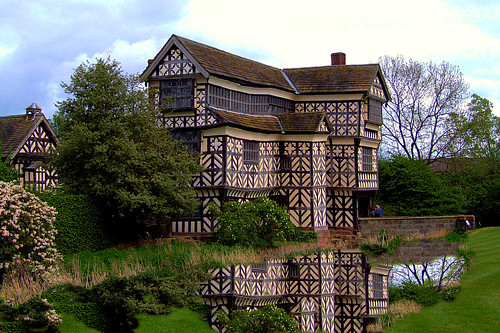
The real history of the world if it were treated properly would be about the sub conscious sexual state of those that had power and how sex played its part..For rich and poor, sex is a dangerous business. The debris of shattered lives is found in historical documentation and the culprit is sex.Think mosley .
In Tudor England. In 1536, in the highly charged atmosphere of Henry VIII's court, Lady Margaret Douglas – the king's niece – dares to marry Lord Thomas Howard secretly for love. When he finds out, the king throws Howard into the Tower, where he writes some tragic poems and then dies.

Most of Henry VIII's wives finish badly. The first, Catherine of Aragon, is divorced and dies in disgrace; the second, Anne Boleyn, is beheaded; the third, Jane Seymour, dies shortly after giving birth; the fourth, Anne of Cleves, is pensioned off after Henry finds her so unattractive that he refuses to consummate the marriage; the fifth, Catherine Howard, is beheaded for adultery. Only the sixth, Catherine Parr, gets the better of the king, regularly beating him at cards and finally surviving him.

Nor is life any safer for the poor. In 1517, a man returning from a pilgrimage to Our Lady at Willesden (now in west London) meets a young woman at the roadside. She's left home to look for work in the City. Promising to help her, he takes her to a brothel in London's Southwark and hands her over to a prostitute. But the woman escapes, aided by a waterman's wife.

When William Harrison divides society into four parts, he doesn't mention women or children. These are assumed to follow the rank of their husbands and fathers. Women are usually described as the daughter, wife or widow of someone else, reflecting their subordinate position. Because men own all a family's property, only widows or unmarried women can make wills; 90% of wills are made by men.
Childbirth is an exclusively female affair, with only female midwives in attendance and no doctors. After childbirth, babies are rapidly baptised because of high infant mortality, usually in the absence of their mothers. New mothers are not allowed in church until about 30 days after the birth, and then must be 'churched', or ritually purified.
In 1500, few girls are taught to read and write, but 100 years later, the literacy rate for women is as high as at any time until the 19th century. And, despite women's officially inferior status, Tudor popular ballads are full of witty wenches outwitting stupid swains or strong wives beating weak husbands with their ladles.
And then there is Bess of Hardwick. A Derbyshire squire's daughter, she triumphantly conquers the Tudor man's world by marrying (and outliving) four successively wealthier husbands, ending up as countess of Shrewsbury. Her marriage to the earl is extraordinarily quarrelsome – she even accuses him of adultery with Mary Queen of Scots. Her talents have been listed as 'sexual politician, estate manager and speculator, industrial investor, loan shark and architectural patron'. Her house – Hardwick Hall – can still be visited today.
01.jpg)
In some communities, however, uppity women are punished in a ritual known as the Skimmington ride, in which neighbours mock wives who dominate their husbands and men are ridiculed as cuckolds.

By the late 16th century, the insistence of conduct books that women should be silent, chaste and modest suggests that, in reality, women are more independent. Pamphlet wars about the 'nature of women' show that their status is hotly debated.
Marriage
Most couples marry in their late 20s, when they have enough money to afford to live outside the parental home.
Because divorce requires special religious dispensations, most marriages end in the death of one partner. Such deaths are common, however, and 25-33% of all marriages are second or third marriages. Many families include children from a previous marriage, and many people have step-siblings.
Prostitution
Southwark, in south London, is the red-light district, with plenty of brothels (called 'stews' because of their origins as steambath houses) as well as diversions such as theatre. Both Philip Henslowe, a well-know theatre impresario, and his son-in-law Edward Alleyn, a celebrated actor, find owning a brothel profitable. Brothels are usually whitewashed and have a sign. At one point in 1546, Henry VIII orders the brothels to close, but such widespread clean-ups are rarely successful. The authorities occasionally raid such 'bawdy houses', some of which are moated and have high walls to repel attackers (including the crown).
Cases of abuse are not unknown. In 1550, for example, a London haberdasher called Middleton is taken to court for letting his wife, their daughter and a 10-year-old serving maid have sex with Nicholas Ballard, a gentleman.
In 1553, in Mary I's reign, Parson Chekyn of St Nicholas in Old Fish Street is paraded through the streets of London after being found guilty of offering the sexual services of his wife for money.
Some prostitutes are very expensive. A Mirror for Magistrates of Cities, published in 1584, says that a young man might have to part with 40 shillings or more in a brothel for 'a bottle or two of wine, the embracement of a painted strumpet and the French welcome syphilisù
One of the articles I read indicated that proof of syphilis was found dating all the way back to the 13th century in the tombs of monks whose mutilated bones indicated issues caused by congenital syphilis. However, Syphilis’ first recorded details did not come about until around 1494 when the French were consumed by it while they attacked Naples.
It is rumored that the French caught it from the Spanish and before that there are numerous rumors and theories. Once the documented cases were scribed, the disease seemed to break out fast. Perhaps because of the amorous French?
It is no surprise that the disease was later dubbed throughout Europe as the French Disease. Interestingly enough, the French referred to it as the Italian Disease despite their rumored contraction from the Spanish. A few other names for it were lues, Cupid’s Disease and, most commonly known - the pox.
The present day name for the disease of syphilis actually stems from a poem written in 1530 about a man named Syphilus. You can probably guess what the play was about…
Syphilis is only contracted through sexual contact. Although, women who have syphilis can pass it to their children. This type is called congenital syphilis and is transferred in utero, however the disease is no less merciful.
The first bouts of syphilis that the Europeans encountered were much more vicious than it was as time progressed. Initial recordings of the disease refer to pustules covering the body, flesh falling from their faces (perhaps these were the “lepers”) and death occurred within a few months’ time.
Some famous people throughout history who had syphilis, whether rumored or proven are as follows: Lord Darnley - Mary Queen of Scots second husband who, while handsome, was abusive and a womanizer as is evidenced by his disease.
Henry VIII - this is one of the rumored cases. Is it said this is what lead to his difficulty in producing a healthy male heir to the throne. Edward VI - Henry VIII’s son who, though rumored sickly, was actually a healthy child who ended up dying from either syphilis or tuberculosis - either way is a bad way to go.
Martin Alonzo Pinzon who was the captain of the Pinta. This last one did not come as a surprise as one of the original theories of the spread of syphilis to Europe was through Columbus’ crew who contracted it from the Americas.
Initially the disease began with a lesion that started on the spot where the disease was contracted - the sexual organ, anus or mouth. The lesions were large and nonitchy, but looked very gross. Kind of like an open canker on the skin. As the disease progressed, the lesions spread throughout the body accompanied with a rash. The disease dissolved the immune system leaving the body open to all kinds of infection and left many patients with constant fevers, sore throats and headaches. Certain areas of the body could be directly attacked by the disease like the eyes which led to blindness or the spinal cord which led to partial paralysis and the brain which led to insanity.
In the present day, syphilis is easily treated with penicillin. However, given the regressing medical knowledge and application of the renaissance, the ‘cures’ for the pox were not only painful and ineffective, they were also extremely hard on the body and often times caused more problems. Among the cures, the more popular were arsenic and mercury that were applied a number of ways that included: taking it orally, rubbing it on the affected area.
Saturday, 26 February 2011
strudel
Strudel salato di zucchine e prosciutto crudo: perché non provare la ricetta dello strudel in versione salata con le verdure. Qui ti propongo le zucchine e il prosciutto. Non è male, eh? Appetitoso e adatto come antipasto ma anche come insolito secondo. Puoi anche sostituire gli zucchini con gli asparagi o aggiungere le melanzane e i peperoni ma allora è meglio eliminare i fiori di zucca...
Ingredienti per 4 persone
1 rotolo di pasta sfoglia già pronta oppure di pasta fillo
200 gr di prosciutto crudo
5 zucchine grandi
10 fiori di zucca
3 cucchiai di olio extra-vergine
1 spicchio d'aglio
2 cucchiai di semi di papavero
sale
Come prepari lo Strudel di zucchine e prosciutto crudo
Lava bene le zucchine e tagliale in quattro parti per il lungo. In una padella con l'olio e lo spicchio d'aglio e un pizzico di sale fai saltare la verdura per 10 minuti a fuoco medio. Stendi la pasta sfoglia su un tagliere. Disponi le fettine di prosciutto senza sovrapporle sulla pasta. Lava delicatamente i fiori di zucca e privali dei pistilli centrali. Adagia sulla pasta i fiori ben aperti e senza il picciolo. Sopra distribuisci le zucchine saltate in modo uniforme su tutta la pasta. Arrotola il tutto a formare uno strudel e spennella bene di tuorlo d'uovo battuto leggermente. Spolvera con i semi di papavero e premi leggermnete per farli aderire alla pasta. Inforna a 180° per 15-20 minuti, finché la pasta sarà dorata sulla superficie spenellata. Puoi sostituire la sfoglia con la fillo ma devi fare attenzione a creare 3 o 4 strati di questa sottilissima pasta e tenerla sempre coperta da un apnno umido quando non la usi (anche se solo 2 minuti) perché essendo così sottile si asciuga subito e diventa secca. Così se la pieghi ti si sbriciola invece di piegarsi. Ma è di una leggerezza incomparabile.
Ti consiglio di praticare dei tagli longitudinali sulla pasta così da eliminare il vapore che si forma in cottura che bagnerebbe la pasta rendendola molle invece che croccante. Servi già affettato o intero a seconda del tuo gusto.


Subscribe to:
Posts (Atom)