In Italy today many are calling for revolution as the government create new economic problems every day for the people and the poor.As we drift back to what the Victorian worker experience in his period it well to remember exactly what the period was as regards its impact on the working class and the poor.There is a general feeling present within most people's minds today that the Victorian age was one of total misery and alienation where people's lives were subjected to constant abjecation to the needs of capitalism and that of the British Empire, much of this might be true but it was also an age where reforms were carried out for diverse reasons,some because of genuine concern as regards the workers and poor classes and others because of the need to forstall revolution. Marx had said that the first worker revolution would come in the industrialised countries, he thought that no one could withstand the lives that the workers led in the United Kingdom. He was wrong revolution came in a peasant Russia. The Russians did not carry out reforms and so the revolution came . All revolutions only happen because of one thing , that of dire and unlivable circumstances. The French and the Russian are examples.Both of these revolutions were followed up with blood thirty vendetaas on the part of the workers and the poor, the French one the more bloody of all. The main reforms were made principally by Gladstone and Disraeli. But both wanted all reforms to be gradual. The idea of reforms was to have an educated work force and to avoid revolt or revolution.These reforms created one of the most advanced states in the world compared to what was happening worldwide Victoria’s reign (1827-1901) was an age of important reforms in the political and social fields.
The three Reform Acts:
* (1832) First Act abolished rotten boroughs, redistributed seats on a more equitable basis in the counties, and extended the right to vote to any man owning a household worth £10. For many conservatives, the effect of this act was revolutionary.A rotten, decayed, or pocket borough was a parliamentary borough or constituency in the United Kingdom that had a very small electorate and could be used by a patron to gain undue and unrepresentative influence within Parliament.
A rotten borough was an election borough with a very tiny population, often small enough that voters could be personally bribed. These boroughs had often been assigned representation when they were large cities, but the borough boundaries were never updated as the town's population declined. For example, in the 12th century Old Sarum had been a busy cathedral city but was abandoned when Salisbury was founded nearby; despite this, Old Sarum retained its two members. Many such rotten boroughs were controlled by peers who gave the seats to their sons, other relations or friends; they had additional influence in Parliament because they held seats themselves in the House of Lords.
Pocket boroughs were boroughs that could effectively be controlled by a single person who owned most of the land in the borough. As there was no secret ballot at the time, the landowner could evict residents who did not vote for the person he wanted.
In the 19th century there were moves toward reform. This political movement was successful with the Reform Act 1832, which disfranchised the 57 rotten boroughs and redistributed representation in Parliament to new major population centres. The Ballot Act of 1872 enacted a secret ballot, making vote bribery impossible as the briber has no way of knowing how the person voted.
* (1867) Reform Act extended the right to vote to all settled male tenants (the electors were two millions in England and Wales). Before the Act, only one million of the five million adult males in England and Wales could vote; the act doubled that number. In its final form, the Reform Act of 1867 enfranchised all male householders and compounding was also subsequently abolished in the process. However, there was little redistribution of seats; and what there was had been intended to help the Conservative Party . The idea of giving workers the vote may have been simply that of making them feel a part of society thius enabling them to feel they were also running the country or contributing to it. This of course may have been very far from the truth.
* (1884) The Act and the 1885 Redistribution Act tripled the electorate again, giving the right to vote to most agricultural labourers.
Women weren’t granted voting rights until the Act of 1918, which enfranchised all men over 21 and women over 30.Most women were considered to have a lack of understanding in things that needed real logic and contemplation and one gets the feeling at least myself that the powers that were thought that the vote would have been wasted on them, and of course women were not seen as a threat. Government and the powers that were had been shaken by huge mass meetings of workers, one of which on Kennington Common had drawn over a million workers.The factory act
The Factory Act (1833) prevented children from being employed more than 48 hours a week and no person under eighteen could work more than 69 hours a week. Adult workers, however, continued to work long hours and remained unprotected by the State until 1847, when the Ten Hours’ Act limited the working hours to ten a day for all workers.
In 1862 the Mines Act banned women and children under 10 from working in mines. Poor law amendement act
The Poor Law Amendment Act (1834) refused outdoor relief to those people who could not support themselves by admitting them to a workhouse.Repeal of the Test and Corporation Acts. This removed the political disabilities imposed on non-Anglican Protestants by legislation passed in 1673 and 1661 respectively. Following the repeal of these Acts, Dissenters could sit in parliament and participate in local government. The Act changed the Anglican constitution into a Protestant constitution.
1829 Catholic Emancipation Act. This controversial legislation allowed Catholics to sit as MPs for the first time since the Elizabethan Act of Settlement (1558/9). The Act was passed by Wellington's government despite huge opposition; the constitution now became Christian but non-denominational.
Metropolitan Police Act. This was the culmination of the work of Robert Peel to establish a civilian, unarmed police force. It was the foundation of policing in Great Britain and was based on his work in Ireland.
1831 (Hobhouse) Factory Act. This was the third Factory Act, its predecessor being the 1801 Health and Morals of Apprentices Act and the 1819 Factory Act. Hobhouse's Act forbade night work for persons under the age of 21.
1832 Reform Act. It took almost two years for this Act to reach the Statute Books and brought Britain to the verge of revolution. The Reform Act was the first systematic change to the constitution; it extended the franchise to include those who did not own landed property and was the first of a series of constitutional changes.
1833 Factory Act. Passed by the Whig government, this Act was an attempt to regulate the working hours of women and children. It left much to be desired but was a step towards government regulation of working conditions.
Abolition of Slavery Act. This was the culmination of a lengthy campaign that had begun during the 18th Century. The legislation was finalised by the Jamaica Act of 1839.
first Education grant. Although not a piece of legislation, the grant of £20,000 for the provision of schools was the first time that the goverment had involved itself in education in any way. The first Education Act did not reach the Statute Books until 1870.
1834 Poor Law Amendment Act. Following the 1832 Reform Act, the PLAA was intended to reduce the poor rates; it was not intended to help the poor who suffered as a result of the legislation. The PLAA replaced the existing poor laws and was responsible for the establishment of workhouses throughout the country. The poor were treated as criminals and people starved rather than apply for poor relief because that meant that they would become inmates of the dreaded "poor law bastilles".
1835 The Municipal Corporations Act was a local government version of the 1832 Reform Act. It made existing municipal corporations more answerable to the electors and allowed other towns to apply for incorporation.
1836 Civil Marriages Act: after the passing of this law, non-Anglicans were able to marry either in their own Church or in Registry Offices. The Church of England lost its monopoly over marriage services
Tithe Commutation Act: this provided for the payment of tithes to the Church of England in cash, depending on the price of wheat.
reduction of Stamp Duty. The Government's decision to reduce the stamp duty was primarily due to the success of the "war of the unstamped", and in 1836 the duty was reduced from 4d to 1d, in order to take the unstamped newspapers off the streets while allowing legal newspapers wider circulation.
1837 Registration Act (of Births, Marriages and Deaths). Although the 1833 Factory Act restricted working hours for young people, there was no means of telling the age of a person since no official records existed. Anglican churches had to recorde baptisms, marriages and burials but there were few records for non-Anglicans. This legislation made it compulsory for all births, marriages and deaths to be registered at a Registry Office; certificates were issued for each event and a second copy was retained at Somerset House in London. The administration of this Act was within the remit of the Poor Law Commission.
1838 Irish Poor Law Amendment Act. After a Commission reported that the 'importation' of the English 1834 Poor Law Amendment Act was inappropriate for Ireland, the government brought in its own "experts" and the 1834 PLAA was passed for Ireland. It was implemented just before the outbreak of the potato blight and proved to be inadequate to meet the crisis.
1839 The Jamaica Act finalised the 1833 Abolition of Slavery Act, setting the remaining slaves and apprentices free in the British colonies.
The Rural Constabularies Act extended the 1829 Metropolitan Police Act and required counties to establish their own police forces. The Act was passed in the face of Chartist activity.
1840 Penny Post. This was the idea of Sir Rowland Hill. Prior to this, recipients paid for any letters that were sent to them. Hereafter, the sender attached an adhesive, pre-paid label to any items that were posted. The most famous 'stamp' of this period is the Penny Black.
1842 Railway Act. This first piece of railway legislation was mainly a safety Act to ensure that railways ran safe services. New lines had to be inspected by the Board of Trade, which could demand traffic returns and inquire into accidents.
The Mines Act prohibited the employment of all females and boys under 10 years old from working underground in mines.
1844 The Railway Act ("Parliamentary Train Act") followed Gladstone's Committee of inquiry into railway policy. By this law, the government assumed the absolute right to take control of all railways in times of national emergency and to fix fares and freight charges. It also said that railway companies had to provide a minimum service of one train each day each way, travelling at not less than 12 miles per hour and stopping at every passenger station, charging no more than 1d. per mile for third class passengers.
Bank Charter Act. This Act tied the issue of bank notes to the Bank's gold reserves and required it to keep the accounts of the note issue separate from those of its banking operations. The Bank of England had to produce a weekly summary of both accounts.
This Factory Act legislated only for textile factories and was the successor to the 1833 Factory Act. It said that women and young persons (13-18) were to work no more than 12 hours per day; children under 13 were to work no more than 6½ hours per day and no child under 8 was to be employed.
The Companies Act aimed to prevent 'reckless speculation' and to prevent the establishment of dubious compaines by making it compulsory for all companies to be registered officially. The companies also had to issue prospectuses and publish accounts regularly.
1846 Repeal of the Corn Laws. The Corn Laws had been passed in 1815 and had raised the price of wheat artificially, leading to an economic depression. A concerted campaign for the repeal of the Corn Laws had been going on since 1838. Consequent upon the repeal, the career of Sir Robert Peel was terminated.
Gauges Act. This was another piece of railway legislation that prohibited the extension of the 7' gauge, except on the Great Western Railway and said that a third line of 4' 8½' had to be laid where 7' track met 4' 8½" line.
1847 Factory Act. Yet another piece of compromise legislation by the Whig government, this so-called '10-Hour Act' said that women and children between the ages of 13 and 18 could work a maximum of ten hours a day or 58 hours a week. The precise times of work were not set down and the 'relay' or shift system survived. Working hours for men were left untouched.
Poor Law Act. This Act followed on from the 1834 Poor Law Amendment Act and replaced the Poor Law Commission with a Poor Law Board headed by a government Minister. Poor releif became more responsible to parliamentary control.
1848 Public Health Act. This was the first piece of legislation that attempted to deal with issues of public health. However, it was permissive rather than compulsory in towns other than Municipal Corporations. The Act established a central Board of Health and allowed Local Boards of Health to be set up if more than 10% of the population petitioned for one. No central inspection was required for authorities that had Boards of Health outside the legislation. Towns where the death rate exceeded 23 per 1,000 were obliged to set up a Board of Health. 1849 Repeal of the Navigation Acts. These laws had been introduced in the Seventeeth Century and said that goods being imported into Britain and her colonies had to be carried either in British ships or the ships of the country where the goods had origin. The laws had been modified during the 1820s but finally they were repealed.
1850 Factory Act. The law dealt only with textile factories. Women and young persons (13-18 years old) were to work in factories only between the hours of 6 a.m. and 6 p.m. or 7 a.m. and 7 p.m. but working hours were raised from 10 to 10½ per day.
Coal Mines Inspection Act. The 1842 Mines Act had not dealt with safety in the mines; this legislation attempted to rectify that omission. More inspectors were provided to enforce the 1842 Act and were to produce reports of conditions and safety standards in the mines. The coal mine owners opposed all attempts to regulate conditions in the mines and many of these men sat in the House of Lords; one of the most influential was the Marquis of Londonderrry who owned many of the coal mines in the north east of England, particularly around Durham.
1851 Ecclesiastical Titles Act. In 1850 Pope Pius IX restored the Catholic hierarchy in Britain, giving the Catholic Church a hierarchy like that of all Catholic countries.Th Ecclesiastical Titles Act was an anti-Catholic measure intended to prevent the newly createdCatholic dioceses from taking existing Anglican diocesan names. Ironically, many of the Anglican dioceses had continued to use established Catholic names after the Reformation. The law was repealed by Gladstone in 1871. 1855 Abolition of stamp duties on newspapers. In June the final remaining penny of the British newspaper duty was removed and in September the Daily Telegraph appeared at the price of 1d. For the British working man, the newspaper became what reformers in the 1830s had predicted: 'the readiest, the commonest, the chief vehicle of knowledge'.
1856 County and Borough Police Act. The Metropolitan Police was established in 1829; in 1839 the Rural Constabularies Act was passed. This third piece of legislation obliged the counties to organise police forces, subject to government control and devised a system of inspection already in use in factories, workhouses and education. Grants to the police became dependent on the efficiency of the force: it was estimated that half of them were not efficient. The Act shifted the emphasis from the prevention of crime to its detection.
1857 Matrimonial Causes Act. By this Act, divorce courts were established. Women were given only limited access to divorce which could be obtained only on a specific cause other than adultery. Right of access to children after divorce was extended and women were able to repossess their property after a legal separation or after a protection order given consequent upon the husband's desertion. 1858 Abolition of the property qualification for MPs: this was one of the demands made by the Chartists. From this date, men did not have to own property in order to stand as candidates in parliamentary elections.
Jewish Disabilities Act implemented. In 1847, Baron Lionel de Rothschild was elected as an MP for London but objected to taking the oath which included the phrase "on the true faith of a Christian". He asked to be sworn in on the Old Testament. It took eleven attempts in the House of Lords to have the oath changed. Subsequently, Jews were able to take their seats in both Houses.
1859 Molestation of Workmen Act. This Act allowed peaceful picketing in the event of strike action taking place. The Act said that 'no person, by reason merely of his endeavouring peaceably and in a reasonable manner, and without threat or intimidation, direct or indirect, to persuade others to cease or abstain from work, in order to obtain the rate of wages or the altered hours of labour agreed to by him and others, should be deemed to have been guilty of "molestation" or "obstruction".'
1860 Food and Drugs Act. This was the first attempt at legislation to prevent the adulteration of food. It was common to find harmful additives in staple foods: white lead in flour, ground glass in sugar, red lead in coffee for example. The new law made the inclusion of additives a criminal offence. However, it was not very effective and had to be amended in The Mines Regulation and Inspection Act increased the number of mines inspectors and prohibited boys below the age of 12 from working underground.
1861 Repeal of paper duties. Gladstone helped the publishing industry by abolishing the excise duty on paper. This made producing newsapers cheaper still; it revived rural paper works and encouraged the growth of London newspapers and the provincial press. 1866 Sanitary Act. Finally, it was recognised that the 1848 Act had failed to produce the desired results: this was due mainly to that Act being permissive rather than compulsory. The 1866 Act compelled local authorities to improve local conditions and remove nuisances (health hazards). They became responsible also for the provision of sewers, water and street cleaning. The Act enforced the connection of all houses to a new main sewer; it set definite limits for the use of cellars as living rooms, and established the definition of 'overcrowding'. Every town was to appoint Sanitary Inspectors and the Home Secretary was empowered to take proceedings for the removal of nuisances where local authorities failed to act.
1867 the second Reform Act. This extended the franchise to most urban working men.
Master and Servant Act. This Act amended an existing piece of legislation; strikers could now be prosecuted only for breach of contract. The Trade Unions were still dissatisfied, however, because it was possible for criminal proceedings to take place on the grounds of 'aggravated causes'. 1869 Disestablishment and Disendowment of the Irish Church. This Act came into effect on 1 January 1871. All ecclesiastical property belonging to the Church of Ireland, except churches in use, was vested in the Commissioners. Compensatoin was set at £16 million: half of the capital of the confiscated property and surplus funds were to be used for the relief of suffering. The Act also said that no Irish bishops were to sit in the House of Lords. Nonconformist ministers were to be given a grant from the Regium Donum (gift of the monarch) The Church of Ireland was to have a General Synod that was elected triennially by the dioceses. 1870 Irish Land Act. This law was passed by Gladstone's government and was intended to protect tenants against unfair eviction. Landlords were required to pay up to £250 to tenants who had been evicted unfairly and tenants were assisted in the purchase of their holdings by being able to borrow up to 2/3 of the cost from the government.
Married Women's Property Act. This piece of legislation allowed women to keep £200 of their own earnings.
(Forster's) Education Act. This Act was intended only to 'plug the gaps' in the educational provision that existed. The two religious organisations that ran schools were given grants and the Act provided for the establishment of so-called 'Board Schools'. Education was neither free nor compulsory under this legislation.
Cardwell's army reforms begin. Cardwell was the Secretary of State for War; his reforms continued for over ten years.
1871 University Test Act. Until the passing of this Act, all academics and students at Oxford and Cambridge Universities had to be practising members of the Anglican Church. By this legislation, the privileges of the Anglican Church were removed and the universities were open to all with suitable abilities regardless of religious faith.
Civil Service reforms. Posts in the Civil Service were dependent upon privilege and connection with the 'right' people until this legislation. Thereafter, positions were open to all who could pass the examinations. The Foreign Office was excluded from the legislation, however, and continued to be the domain of privilege and connection.
Trade Union Act recognised unions as legal bodies with the right to own property and funds. Unions were allowed to protect these at law and they were also allowed to conduct strikes.
Criminal Law Amendment Act. This took away the power of strike action: although TUs could conduct strikes under the Trade Union Act, this second piece of legislation forbade the use of picketing of any description )even peaceful picketing). Consequently, it would be almost impossible for a strike to be conducted.
Abolition of the purchase of Commissions. This was one of Cardwell's Army Reforms by which officers in the British Army were to be appointed by merit and ability rather than being able to buy rank. The legislation met great opposition. 1872 Licensing Act. Gladstone believed that drink was the curse of the working man and wanted to introduce sobriety as a character-reform. He also believed that a sober, hard-working man would be able to save money and therefore have savings for his 'retirement'. This Act
- gave magistrates the power to issue licenses to public houses; where it was thought that there were too many of these, magistrates were able to close down some of them
- public houses now had to close in towns at midnight and at 11 p.m. in the countryside - so that agricultural labourers could walk home and arrive before midnight
- the adulteration of beer was made illegal: it was common for salt to be added to it, to make the consumers thirsty and so drink more.
1872 Ballot Act: this was one of the things that the Chartists had demanded. The Act introduced the secret ballot to all elections, making them less corrupt and less subject to bribery and corruption. The legislation was opposed by landlords and employers who could no longer control the votes of their tenants and workers.
Coal Mines Regulating Act. This insisted on the introduciton of safety methods such as fan ventilators, stronger timber supports, wire ropes, imporved winding gear and better safety lamps.
Public Health Act. This divided England and Wales into Health Authority districts, each of which had to have its own Medical Officer of Health and accompanying staff. The duties of the Health Authorities were not specified and most Health Boards were unwilling to spend the required money on radical reforms. 1873 Judicature Act. This Act rationalised the legal system in Britain by united seven different courts into one High Court of Justice.
1874 Licensing Act. This was an amendment to Gladstone's Act and provided for longer opening hours.
The Factory Act reduced working hours to 10 per day; it also said that no child couild be employed until the age of 10 and no young person could work full time until the age of 14. 1875 Artisans' Dwelling Act: local authorities were given the power to buy and demolish slum houses and replace them with modern, healthy housing. Because of severe opposition, the powers were permissive rather than compulsory
Conspiracy and Protection of Property Act. This again legalised peaceful picketing and allowed unions to cary out as a group whatever individuals could do in law. Unmions could no longer be charged with conspiracy for taking such action.
Public Health Act: This legislation was the work of Richard A Cross. The Act set down in detail what local authorities had to do in terms of public health: - ensure that there was an adequate water supply, drainage and sewage disposal
- nuisances were to be removed
- offensive trades were to be regulated
- contaminated food was to be found, confiscated and destroyed
- cases of infectious diseases were to be reported to the local Medical Officer of Health who then had to take appropriate action
- further regulations dealt with matters concerning: markets; street lighting; burials
Employers and Workmen Act: this put workmen and their employers on the same legal footing in cases of breach of contract: breach of contract was a civil offence. Prior to this legislation, if a workman broke his contract it was deemed to be a criminal offence, whereas if an employer did so it was only a civil offence.1876 (Sandon's) Education Act. School Attendance Committees were established to encourage as many children as possible to take advantage of educational opportunities and parents were made responsible for ensuring that their children received basic instruction. The Committees could help to pay the school fees if parents were too poor to do so themselves - but this was not compulsory.
Merchant Shipping Act: this was the work of Samuel Plimsoll and was aimed at preventing ship owners sending unseaworthy or overloaded ships to sea, at the expense of the sailors' lives. The Act required a series of 'lines' to be painted on the ship to show the maximum loading point. It was not until 1890 that Board of Trade officials applied the regulations that Plimsoll had intended.Plimsoll is still a household name because of what is known as the Plimsoll line, this governs the cargo of a ship as regards its weight.
1878 Factory and Workshops Act. All workshops and factories employing more than 50 people were now to be inspected regularly by government inspectors rather than by local authorities (as previously).
1880 Employers' Liability Act aplied to all manual workers except seamen and domestic servants; it gave to injured employees or their dependents the same rights to recover damages from their employers that non-employees always enjoyed
1881 Irish Land Act. This was another piece of legislation passed by Gladstone and it gave to Ireland what Irish tenants had been requesting for many years: the so-called "3 Fs" - fair rents, fixity of tenure and free sale of the tenancy. The Act also provided for the establishment of Land Courts which would decide on what was a 'fair rent'. Unfortunately, the Land League did everything it could to prevent the Act from working and the evictions and violence in Ireland continued.
(Mundella's) Education Act. This made attendance at elementary school compulsory for all children between the ages of 5 and 10. Parents had to pay 'school pence' - about 3d. per child per week. Often, poor parents could not afford this sum of money. 1882 The Married Women's Property Act allowed all married women to continue as the separate owners and administrators of their property after marriage.
1884 third Reform Act. This extended the franchise to most adult males.1885 Redistribution Act. This Act went hand in hand with the Reform Act: all boroughs with fewer than 15,000 inhabitants lost their MP; those with fewer than 50,000 MPs lost one MP. There were now 142 seats available for redistribution and these were given to densely populated areas. Constituencies were reorganised so that there were 647 single member constituencies of the 670 in existence.
1888 County Councils Act. This legislation established County Councils. The old local government boards (about 27,000 of them) were replaced by 67 elected County Councils which had extensive and compulsory powers to deal with matters such as road maintenance, the building of bridges, the establishment of a police force and the administrative duties that had previously been within the remit of JPs. Some sixty towns with populations over 60,000 became County Boroughs with the same powers as County Councils. Under this legislation, unmarried women were allowed to vote for councillors although they were not allowed to become councillors themselves.
1891 The Fee Grant Act effectively made elementary education free of charge
1894 Local Government Act (often referred to as the Parish Councils Act) . This Act divided the counties into Urban District Councils and Rural District Councils, each with its own elected coucil. Rural District Councils were divided into civil Parish Councils which had to be elected if the population exceeded 300. Generally, the civil parishes had the same boundaries as the ecclesiastical (Church of England) parishes. Women were now allowed to stand as candidates and sit as councillors on these councils.
1897 Workmen's Compensation Act. This law said that an employer should compensate a workman who was injured, and the dependants of a workman who was killed at work, irrespective of any negligence on the part of the employer or his other employees. The Act was restricted to a limited number of employments, the so-called "dangerous trades" that included the building trade.
 A visit to the East End opens an often unexpected window into British life. Five-hundred years ago the area became home to London's smelly, dirty trades; breweries, slaughter houses and factories were all established downwind of the wealthier West End. The working-class poor who labored at such industry swiftly earned the area a reputation for criminality, and American author Jack London described it as "outcast London."kray school below
 That notoriety was cemented by the Whitechapel "Jack the Ripper" murders in the late 1880s and the Kray twins' gangland empire of the 1960s.
 where the twins grew up -- has long since been demolished, the road itself is still there, as is their first school, Wood Close in Brick Lane. The twins owned The Speakeasy Club (thespeakeasyclub.com) at 48 Margaret Street
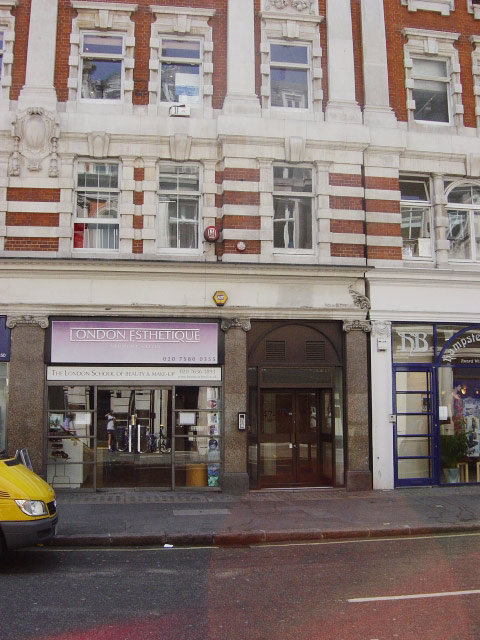 , which hosted performances by The Beatles, David Bowie, Deep Purple, Jimi Hendrix, Bob Marley and The Who. The Speakeasy Club was a late-night haunt for the music industry from 1966 to the late 1970s. The club was managed by Laurie O'Leary (a lifelong friend of the Kray twins) from 1968 to 1977 and Roy Flynn, who was also the first manager of Yes.
 Ronnie Kray was drinking either in The Lion
 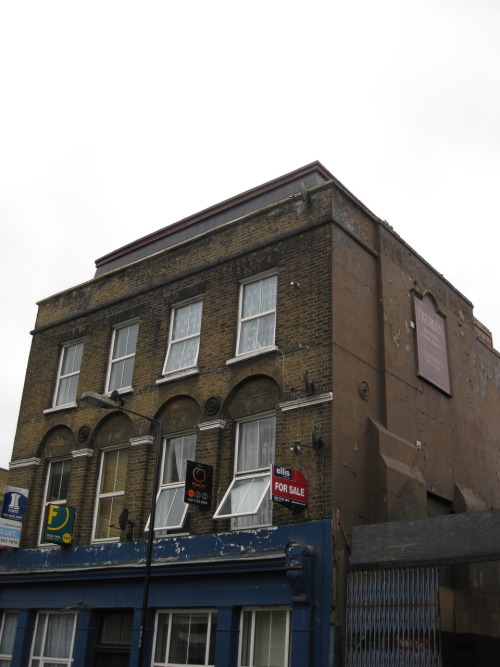 The Widows Pub on Tapp
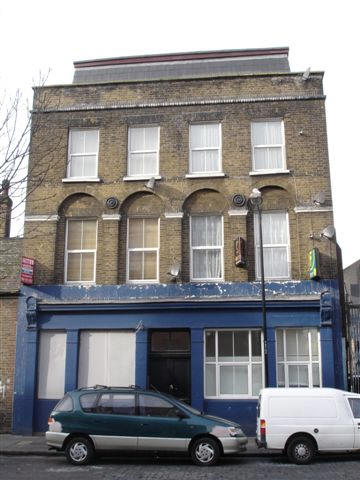 Street when he heard George Cornell, a member of a rival gang, was on his territory.below capenters arms then and now, a kray owned pub.
 He was driven home to get a gun, then went to the Blind Beggar pub at 337 Whitechapel Road where he murdered Cornell. Although Bow Street Magistrates at 28 Bow Street
 is now a hotel, the building still looks much as it did when the Krays were charged there. Insider fact: Oscar Wilde was also a reluctant guest. St Mathews Church at Hereford Street
 hosted horse-drawn funeral services for Reggie and Ronnie Kray that famously brought the East End to a halt. Detrain from the Tube at Whitechapel.