Showing posts with label writing. Show all posts

Saturday, 21 September 2013

writing

Why is it we hope for in any one person, or thing, to be so many more things than any one thing could be?
Is there something errant in hoping that one person can be many things? I don't know.

What if there is nothing wrong with your partner?  What if they are as much as you could hope for any one person to be? But what if you find them boring because they are what they are and there is nothing you can change. You know they cannot even do the things they know properly or do they just so so.
But Would we expect Mozart to be able to write rock n' roll? Would we expect Elvis to be good at cookery. All this is not the point because we are not really talking about one person that can do something really good we are talking about one person that can do one thing just O.K.
Would you expect Hemingway to be able write in Hesse's voice?
Then why do so many people want their individual significant other to be so many more things than one person could possibly be?  Is the error in the want?  Is the error in the reasoning?  Is the error in the assumptions?  Are there no errors at all?
The classic cliché analogy against being emotionally intimate with only one person is:  After tasting chocolate, who would only eat vanilla the rest of their life?
This dilemma is as old as mankind.  Evidently, even Adam and Eve, when given so many "perfect" things, could not quell their curiosity, could not keep from eating one more fruit from the one tree forbidden to them, the Tree of Knowledge of Good and Evil (what a lovely metaphor - not knowing whether something is truly good or evil until personally trying and experiencing it.)
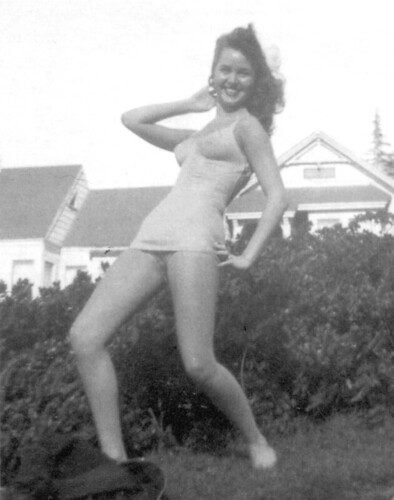
When you're frustrated with your one partner, do not be critical of them for being only one other person.  I'm not suggesting you seek or not seek additional companions for complimentary or supplementary purposes.  Rather, I'm emphasizing the idea that: Regardless, of whether you want chocolate and vanilla, additional lovers or friends:  In those pursuits, do not fault your friend and lover for being only one person, do not fault them for not being able to be more than one.  If you fault them for being "only one person," then the reasoning error is probably your error.A woman I used to live with years ago and who finally to my relief  left me  used to criticize me for the unending love I still had for people who I had loved before her, long before our relationship.  She left then months later told me she had made a terrible mistake and wanted to come back. I replied that I would never have done the same thing that she had  because I always feel a loyalty to people especially to a lover but now I was in love with someone else , I had met an Italian and was deeply in love with her , not just love I was obssessed with her, my every moment was her and I could not understand why her every waking moment was me, I even thought she must be mad. But before her me and my English girlfriend were unmarried and lived in her house in the East End of London and she was very rich. We lived in the poor East End because she wanted to taste the poverty of the poor. She was 20 and I was 21. After me she lived out the rest of her life with a man who was boring in the extreme but who cared very much for her, these were her words years later when we met in the Arsenal underground near where I live in London. She recriminated about what I was supposed to have done (I didnt actually do anything) and was penitent about a life thrown away with a man she had not loved and could not love apart from brotherly love according to her.
She had had a child and loved the child but did not love the Father apart from mutual respect and care. She said "I have to love him because he is the Father of my child" . Obviously nothing is as meaningless as that .
At that point I had gone past caring about her in  a passionate lovers way but I agreed to meet her again in a pub because once we had been together.She told me about her boring life with the academic she had married and it was sad to see someone who felt they had thrown their life away. She was still with her husband but I got the feeling that it was a kind of seperation although they still shared a bed together. The sex it seemed was something that they managed to get through every now and then. She said to me that being with her man was more lonely than being single.I  went through the motions of saying stuff like well I am sorry bla bla bla. 
But I was sad that she hated me because I had not saved her life as she thought I could have done . One of her laments to me was "You are and were a bastard but fun", I understood that perfectly because I live for fun and her academic husband seemingly was a total bore after the false veneer of intellectualism had worn off after the first few months of marraige. "Why the fuck did you leave me and get with that moron " I asked .She replied that she wanted to live normally for once .But now she wished she had never done what she did. She continued "I am only waiting for the kid to become a teenager then I am leaving him".
The statistics suggest , supposedly, that people are  content with being single, meaning they may genuinely prefer to live on their own rather than choosing to live with a significant other who they cannot really love.  If true, I do not find that fascinating.  Also, I find it easy to understand because I’m not a person who likes to live alone, but  I can imagine  being interdependent with someone you cannot love..
I wonder if modern life is so easy and convenient in general that when people are faced with the regular difficulty of being considerate with and anticipating and meeting the daily needs of a significant other who they do not love they just go on with it :  Do many  people just prefer to focus on themselves and consider the inopportune other half as being merely someone who pays the bills or half of them?  Is that so much easier than a real love ?  This is not a rhetorical question.  I really don’t know the answer.
 One of the best pieces of advice I received as a young person was this:  Don’t look to find Mrs. Right;  rather, work to become the right person.  And I still think that is very good advice.
Adding to that line of thinking:  As you already know, we never get to choose who chooses to love us.
I don’t know the reasons why the  woman above   left me although I was glad she did (Id just met someone who was not only the most beautiful woman Id ever seen anywhere including any movie starbut also one of the kindest people too).  One day she just said I've met someone and she left, I did not make a fuss as I am one of those people who suffer in silence but in that moment I was wondering what I had done to be left.She told me, too sexual, too much into things she was not interested in , too working class etc etc etc. Some of the reasons were true, some were not.But at that point I could not care any more.I was focused on my new love. But in recent years I have often wondered one thing about my old loves like the above woman
Is it better to love or to be loved?
Would you personally rather be defined by who you loved or who loved you in return?

But here’s an additive idea I’m getting to:  Part of the reason I never stopped being loyal and never stopped loving  the women in my past is that even though they fall from my mind maybe for years, in time they come back again and you often wonder what they are doing and how they are getting on,you already know many of the answers, you know that they won't be very happy, you know that they will have put all their energy into the child they had with the person they couldnt love, and you know that the beauty that attracted you once will have faded away, if the years passed are long enough.
But there is one true thing: I perceived that regardless of how good  a person you are, how hard you try, how skilled you are, how successfully you maintain your weight, charm, and appearance:  You still never get to choose who continues to love you.
And so part of the reason I’ve never stopped loving people in my past (as if I could choose to turn love on or off) is:  Choosing to continue loving them was the best solution I could think of when faced with keeping faith with all the good times we had, cooking together, dancing together, walking home from midnight movies at 3 in the morning then sharing a single bed together.All those things. 
From my limited observations, I think many people respond to breakups and heart-achet  in different ways.  Many demonize the person who left them, or the person they fell out of love with, or the person that bored them or the person who was no longer their most interesting social option, and they burn the bridges behind them.
I don’t know why it appears to be so common in the human psyche that people prefer to mischaracterize and paint the people who left them in negative lights.

Other people, like Hamlet, when faced with so much pain, sincerely debate whether any kind of “end” may be superior to the pain of continuing to love or continuing to remember the truths of their past love.
Part of the reason I’ve never stopped loving people from my past is:  I think as individuals, sometimes the best we can do is to open our arms . . . and leave them open . . . sometimes even long after someone has left us.  Because again, we don’t get to choose who wants to stay, and sometimes the best we may be able to do is love those few or the one  who choose to remain.
Returning to the original idea these thoughts are built from:  My social pursuits have not been to find the one person who I will adore and who will enjoy staying with me forever.  My pursuit has not been to find “the one and only.”  Rather, I choose to be someone who loves . . . who chooses to keep loving.
I could not determine who would continue to love me.  But I could choose to keep loving the few who chose me.  Does that make sense?
The better question is not as Hamlet framed it:  If things don’t go your way, the options should not jump to:  Do I continue to exist or to not exist?  Now that my life with “him or her” is over, do I continue to go on?  Do I have to kill the past love to genuinely love someone new?  No, I don’t think so.  That has not been my experience.
Rather, when things don’t go your way: (and they will often not go your way):  Sometimes you continue loving in the direction of your unending failures – because that is a more courageous and noble choice than either killing yourself or killing a beautiful part of the experiences and relationships that formed you.  Sometimes it may be okay to choose to continue loving a person, even long after your love is not returned, because that is who you are, you are a person who chooses to love.  You’re not defined by “who loves you.”  You are defined by who you choose to love.
I don’t know magic.  And I may be below average in social aptitudes.  I don’t write articles with titles like “How To Gain The Affection Of Any Person You Choose.”  Maybe there are other people who can teach you those things, but I don’t know those things.
The best I know to do, the best I can to suggest to you, is what I do:  I can demonstrate how to keep arms open and to love  well enough that the odds are you will still receive affections in return beyond what you deserve.
I’m sorry.  I wish I could tell you how to get her or him back:  the one, or the several, who got away.  But I don’t know how to do that.
I don’t know magic.  But I know how I love, how I choose to keep loving, how I don’t lie to myself.

Tuesday, 1 May 2012

Beatniks or beats

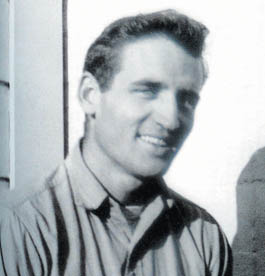
If we look at any important thing that has happened within the experience of human beings most of these are based on people prepared to ask questions that do not want to be answered. Within art many of the great artists were either kicked out of their schools or universities for asking questions and insisting upon an answer.Others simply left Academia disgusted with its lack of answers. Jack kerouac was one.Road trip below, cassidy and leary
 When human beings ask difficult questions then art and society progresses, when those questions are not asked because someone cannot stand the truth then life remains stagnant.
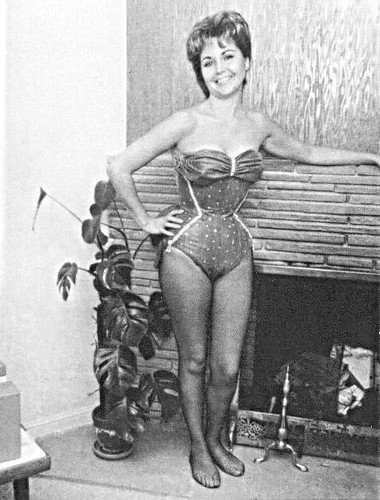
Art is based on conflict as is life and we may also call this struggle.Jack Keouac distinguishes Beats from the Lost Generation of the 1920s pointing out how the Beats are not lost but how they are searching for answers to all of life’s questions. “How to live seems much more crucial than why. Beat describes the state of mind from which all unessentials have been stripped, leaving it receptive to everything around it, but impatient with trivial obstructions. To be beat is to be at the bottom of your personality, looking up.Beat means you are anti materialistic thus anti bourgeois.above cassidys wife, the first one.
America was in the grip of anti-communist feeling with the senator Macarthy running the show.
It was in this climate that the young generation was seeking meaning. Amidst all the conflict and contradiction, the Beats were seeking out a way to navigate through the world. As John Clellon Holmes put it, “Everywhere the Beat Generation seems occupied with the feverish production of answers—some of them frightening, some of them foolish—to a single question: how are we to live?
Jean-Louis "Jack" Kerouac was born in the Roaring 20's in March 12, 1922  and left this world just as the hippy dream started to die in October 21, 1969.(above anti communist Macarthy)
 He had been was an American novelist and poet. He is considered a literary iconoclast and, alongside William S. Burroughs and Allen Ginsberg, a pioneer of the Beat Generation.
The Beat Generation was a group of American post-World War II writers who came to prominence in the 1950s, as well as the cultural phenomena that they both documented and inspired. Central elements of "Beat" culture included experimentation with drugs, alternative forms of sexuality, an interest in Eastern religion, a rejection of materialism, and the idealizing of exuberant, unexpurgated means of expression and being.
Jack Kerouac introduced the phrase "Beat Generation" in 1948 to characterize a perceived underground, anti-conformist youth movement in New York. The name arose in a conversation with writer John Clellon Holmes. The adjective "beat" could colloquially mean "tired" or "beaten down", but Kerouac expanded the meaning to include the connotations "upbeat," "beatific," and the musical association of being "on the beat".We may think also that a heart did really beat while most just ticked and when a heart "beats" it lives.
Kerouac was born in a French-Canadian neighborhood of Lowell, MA. He grew up in a devout Catholic home, and this influence manifested itself throughout the work. During high school, Kerouac was a star football player and earned a scholarship to Columbia University. He dropped out then served on several different sailing vessels, he returned to New York in search of inspiration to write. Here he met the likes of Allen Ginsberg and William Burroughs who would not only become the characters in the book but also form the core of the Beat Generation
Allen Ginsberg's Howl (1956), William S. Burroughs's Naked Lunch (1959) and Jack Kerouac's On the Road (1957) are among the best known examples of Beat literature. Both How  and Naked Lunch were the focus of obscenity trials that ultimately helped to liberalize publishing in the United States. The members of the Beat Generation developed a reputation as new bohemian hedonists, who celebrated non-conformity and spontaneous creativity.
The original "Beat Generation" writers met in New York. Later, in the mid-1950s, the central figures (with the exception of Burroughs) ended up together in San Francisco where they met and became friends with figures associated with the San Francisco Renaissance.
The term San Francisco Renaissance is used as a global designation for a range of poetic activity centered on San Francisco and which brought it to prominence as a hub of theAmerican poetic avant-garde.
However, others (e.g., Alan Watts, Ralph J. Gleason) felt this renaissance was a broader phenomenon and should be seen as also encompassing visual and performing arts, philosophy, cross-cultural interests (particularly those that involved Asian cultures), and new social sensibilities.
In the 1960s, elements of the expanding Beat movement were incorporated into the Hippie counterculture. Kerouac is recognized for his spontaneous method of writing, covering topics such as Catholic spiritualityjazzpromiscuityBuddhism, drugs, poverty, and travel.  
Kerouac became an underground celebrity and, with other beats, a progenitor of the hippie movement, although he remained antagonistic toward some of its politically radical elements.
 In 1969, at age 47, Kerouac died from internal bleeding due to long-standing abuse of alcohol. Since his death Kerouac's literary prestige has grown and several previously unseen works have been published. All of his books are in print today, among them: On the Road is a novel written in April 1951, and published by Viking Press in 1957. It is a largely autobiographical work based on the spontaneous cross-country adventures of Kerouac and his friends during the middle of the 20th century. It is often considered a defining work of the postwar Beat Generation that was inspired by jazz, poetry, and drug experiences. While many of the names and details of Kerouac's experiences are changed for the novel, hundreds of references in On the Road have real-world counterparts.At the time of publication, On the Road was not the first book to criticize contemporary American culture. A nonconformist sentiment characterized the arts and popular culture of the 1950s as a way of rejecting societal norms. Many of the best selling books of the time achieved this same mission.
J. D. Salinger produced the first shock to the tranquil suburban landscape with the publication of The Catcher in the Rye in 1951. His protagonist Holden Caufield struck a chord with young readers also at odds with the adult world. Caufield’s rejection of the regimentation and “phoniness” of the world around him resonated with the struggle for meaning that drove the Beat Generation. Salinger’s rejection of traditional middle-class values signaled the first widely recognized public stand against the cultural conformist pressure
When the book was originally released, The New York Times hailed it as "the most beautifully executed, the clearest and the most important utterance yet made by the generation Kerouac himself named years ago as "beat," and whose principal avatar he is."
Other books were Doctor SaxThe Dharma Bums, Mexico City BluesThe SubterraneansDesolation AngelsVisions of Cody and Big Sur.The two main characters of the book are the narrator, Salvatore “Sal” Paradise, and his new friend Dean Moriarty, much admired for his carefree attitude and sense for adventure, a free-spirited maverick eager to explore all kicks and an inspiration and catalyst for Sal’s travels. The novel contains five parts, three of them describing road trips. The narrative takes place in the years 1947 to 1950, is full of Americana, and marks a specific era in jazz history, “somewhere between its Charlie Parker Ornithology period and another period that began with Miles Davis.” The novel is largely autobiographical, Sal being the alter ego of the author and Dean standing for Neal CassadyThe epic nature of the adventures and the text itself creates a tremendous sense of meaning and purpose for the themes and lessons. Kerouac provides not only the story of a literal journey but also that of an intense internal quest and a pursuit of freedom and self-determination.
The word Beatnik was a media stereotype of the 1950s and early 1960s that displayed the more superficial aspects of the Beat Generation literary movement of the 1950s  .File:Kerouac by Palumbo.jpgThe origins of the Beat Generation can be traced to Columbia University and the meeting of Kerouac, Ginsberg, Lucien Carr, Hal Chase and others. Though the beats are usually regarded as anti-academic, many of their ideas were formed in response to professors like Lionel Trilling and Mark Van Doren. Classmates Carr and Ginsberg discussed the need for a "New Vision" (a term borrowed from Arthur Rimbaud), to counteract what they perceived as their teachers' conservative, formalistic literary ideals.
Neal Cassady was introduced to the group in 1947, and had a number of significant effects. Cassady became something of a muse to Ginsberg; they had a romantic affair, and Ginsberg became Cassady's personal writing-tutor. Kerouac's road-trips with Cassady in the late 1940s became the focus of his second novel, On the Road. Cassady's verbal style is one of the sources of the spontaneous, jazz-inspired rapping that later became associated with "beatniks". Cassady impressed the group with the free-flowing style of his letters, and Kerouac cited them as a key influence on his spontaneous prose style.Kerouac has admitted that the biggest of these themes is religion It was really a story about 2 Catholic buddies roaming the country in search of God. And we found him.."The Beats had a more liberal definition of God and spirituality closely related to personal experience.It was an attempt to replace the model of manhood dominant in capitalist America with a model rooted in foundational American ideals of conquest and self-discovery, they saw conformity as restricting, but in many senses, they view women this way as well. “Reassigning disempowering elements of patriarchy to female keeping, they attempt to substitute male brotherhood for the nuclear family and to replace the ladder of success with the freedom of the road as primary measures of male identity.If we are talking about women within the book then the interactions of the book come down to women denuding men and thus losses of masculinity. He likens his writing to Impressionist painters who sought to create art through direct observation.for instance an impressionist painter wanted the viewer to feel the atmosphere of the moment rather than respond to the view and precise brush lines.  He endeavored to present as raw of version of truth as possible which did not lend itself to the traditional process of revision and rewriting but rather the emotionally charged practice of spontaneity he pursued. Today the more reckless and youthful parts of the text that gave it its energy are the parts that have “run afoul of the new gentility, the rules laid down by the health experts, childcare experts, guidance counselors, safety advisers, admissions officers, virtuecrats and employers to regulate the lives of the young.” He claims that the “ethos” of the book has been lost.The ethos is for self revelation.
On the Road has been a major influence on many poets, writers, actors and musicians, including Bob Dylan, Van Morrison, Jim Morrison, Hunter S. Thompson, and many more. "It changed my life like it changed everyone else's," Dylan would say many years later. Films such as Easy Rider, Paris, Texas, and even Thelma and Louise.
In his book Light My Fire: My Life with The Doors, Ray Manzarek (keyboard player of The Doors) wrote "I suppose if Jack Kerouac had never written On the Road, The Doors would never have existed."