- What:Public Free Visit - Morning at Sky Garden
- When:Friday 1st July at 11:00am
- Attendees:
- gary byrne
- sergio bagaggiolo
- Price:Free
- Reference:210-141361-1
Showing posts with label places. Show all posts
Showing posts with label places. Show all posts
Sunday, 19 June 2016
sky bar

Sunday, 2 December 2012
hampstead in the 20s
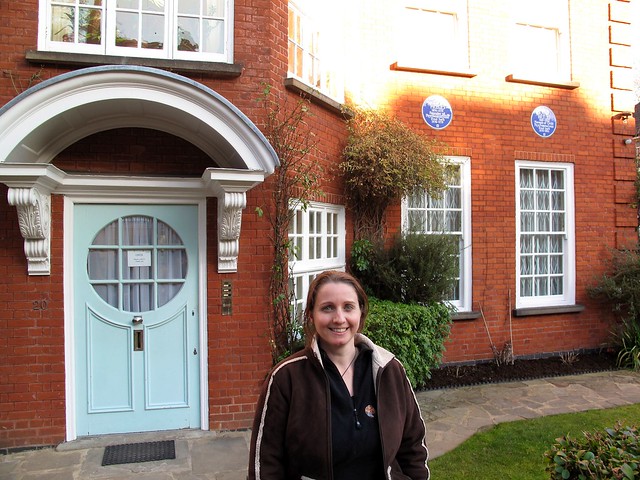
The Surrealists found striking new vistas opened by Freud's discoveries. But Paul Valéry was not a fan (Celeyrette-Pietri 1984), nor was Joyce, who said of psychoanalysis that it was "neither more nor less than blackmail" (Barnes 1922, 299). A darker drama is to be found in the ambivalent relation of Virginia Woolf to psychoanalysis. She made merry about Freud's doctrines throughout much of the 1920s, before changing her mind in the 1930s and finally going with her husband Leonard to meet Freud for afternoon tea in his Hampstead home eight months before his death in 1939. Upon her arrival, he presented Woolf with a narcissus. Two years later she drowned herself in Sussex.
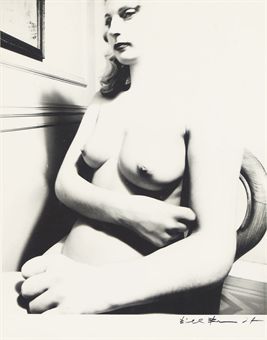
”Socialism,” George Orwell famously wrote in The Road to Wigan Pier(1936), draws towards it ”with magnetic force every fruit-juice drinker, nudist, sandal-wearer, sex-maniac, Quaker, ‘Nature Cure’ quack, pacifist and feminist in England.” His tirade against such “cranks”
 is memorably extended in other passages of the book to include “vegetarians with wilting beards,” the “outer-suburban creeping Jesus” eager to begin his yoga exercises, and ”that dreary tribe of high-minded women and sandal-wearers and bearded fruit-juice drinkers who come flocking towards the smell of ‘progress’ like bluebottles to a dead cat.”
WHEN Winnie Potipher died one of the last surviving links with an old and very different Hampstead vanished with her.
is memorably extended in other passages of the book to include “vegetarians with wilting beards,” the “outer-suburban creeping Jesus” eager to begin his yoga exercises, and ”that dreary tribe of high-minded women and sandal-wearers and bearded fruit-juice drinkers who come flocking towards the smell of ‘progress’ like bluebottles to a dead cat.”
WHEN Winnie Potipher died one of the last surviving links with an old and very different Hampstead vanished with her.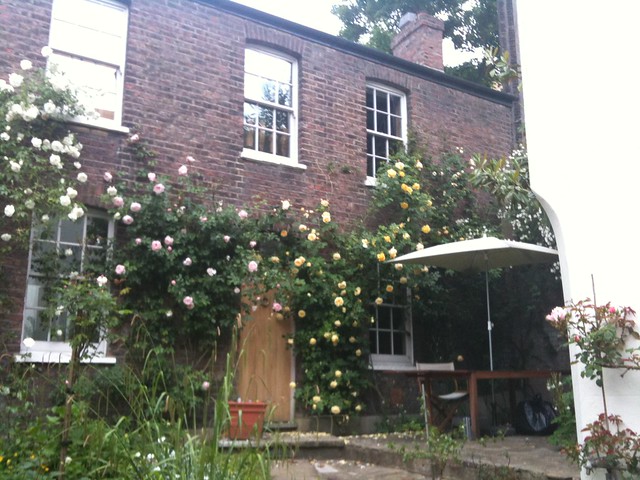
Winifred Mary Potipher, who died last month aged 84, was a lifelong tenant of number 13 Mansfield Place, Hampstead.
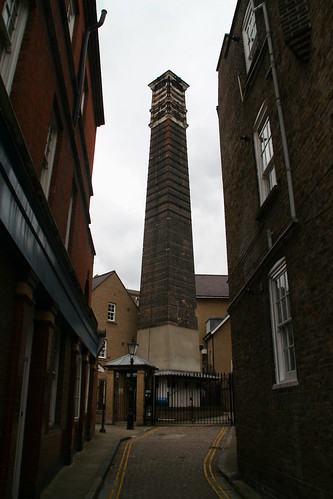
Her parents had been its first occupants a century ago.
Built as married-quarters for local policemen, they were in fact let to working-class families such as Winnie’s whose mother Minnie was in service and whose father Charles was a carpenter.
The houses had outdoor toilets – landlords only fitted Winnie’s with an indoor WC in the 1980s – and families used public baths in Flask Walk
 , though a lucky few had zinc tubs.
Born in 1927, Winnie, an only child, went to school at nearby New End School.
 In the mid-1930s Oswald Mosley’s fascist blackshirts used to meet near Whitestone Pond and Winnie sometimes joined her father heckling.
Occasionally blackshirts were tossed into the pond.
By wartime Winnie’s mother was suffering from agoraphobia and refused to shelter from the Blitz in Hampstead Tube.
Winnie stayed with her mother even after a bomb hit the nearby New End Hospital laundry – fortunately without casualties, completely destroying the front of their home.
Toward the end of the war she worked as a telephonist at the Black Cat cigarette factory, Mornington Crescent.
After peace broke out Winnie met Alec, a handsome engineer who had been a promising athlete before flying in Lancaster bombers, and they married in 1951.
They had two children, Gilli in 1952 and Simon in 1967.
Between, Winnie worked as a telephonist in Roland Smith Motors, then on the corner of Hampstead High Street and Gayton Road.

In the 1950s Mansfield Place also felt the touch of Hampstead’s bohemian world.
Social campaigner and co-founder of Child Action Poverty Group Peter Townsend moved in with his family and it became something of a mecca for intellectuals such as Tony Benn and a young Frank Field.
Slum clearances in Camden Town during the 1960s led to hard-up families being rehoused in nearby New Court, Luton Terrace.

“Many were desperately poor,” Gilli recalled.
“For some reason we didn’t mix much but mum and dad always turned a blind-eye when the kids pinched our milk bottles because they knew they were hungry.”
By the mid-1970s Winnie was working as a receptionist at a doctor’s surgery in Rosslyn Hill,
 from which she retired in the late 1980s.
An avid reader, she was often in Keats Library, Hampstead, but after being widowed in 1981 suffered deteriorating mobility, leaving home less often.
She continued “holding court” at Number 13, Gilli said.
But Hampstead was now awash with money, the number of council tenants fast dwindling.
In Mansfield Place, Winnie was the last of the original tenants.
She had been a “cornerstone of Mansfield Place”, said Gilli.
“Mum came from a generation that always had to cope.
"Her views might have been a little dated but her advice was common sense – sometimes with a wry smile.”
Sunday, 20 May 2012
Charonne
 For most of its existence, Charonne was a quiet and bucolic place, where rich Parisians had country houses and sent their children to be brought up by nannies.
 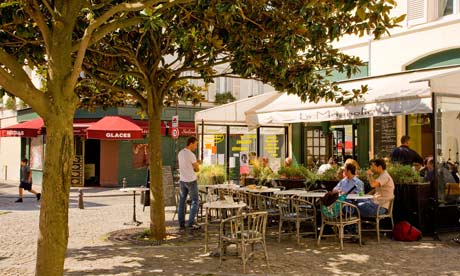 It is perhaps the fact that it has always been a residential place with little or no industry that has helped preserve its charm, with the medieval street layouts still resisting urban planners. However, it is far from being a sleepy place today. It may still have a village feel, but it is that of a village that could be situated equally in France, Algeria or Mali.
 It is this point which really differentiates it from the other ancient communities - such as Montmartre, Vaugirard and Batignolles - that were annexed by Paris at the same time. Although undoubtedly more touristic and superficially more attractive, the soul of these places was long ago sold to gentrification. Charonne is not a village of luxury food stores and antique shops, but rather a place that provides a home to those excluded from the city centre.Anyone who has visited Paris's Père Lachaise cemetery has already visited the village of Charonne. The best known of the city's graveyards was opened in 1804, technically within the limits of Charonne, but officially to serve the needs of Paris. Beyond this megalopolis of the dead, though, is the true village cemetery, a pocket-sized burial ground situated – curiously for Paris – behind the Saint Germain de Charonne church.

This church, sitting on a plateau above what was the heart of the village, can date its origins back to at least the 12th century, and its solid Romanesque tower has always provided the village's main focal point. Directly opposite is the ancient village high street, the still cobbled rue Saint Blaise. The combination of these two elements give this area a quaint, provincial atmosphere, and it is easy to forget that the old boundaries of the Charonne village now form the eastern half of the city's densely populated 20th arrondissement. Walk a few hundred metres further east and you'll find high-rise tower blocks and the city's periphérique motorway.
For most of its existence, Charonne was a quiet and bucolic place, where rich Parisians had country houses and sent their children to be brought up by nannies. It is perhaps the fact that it has always been a residential place with little or no industry that has helped preserve its charm, with the medieval street layouts still resisting urban planners. However, it is far from being a sleepy place today. It may still have a village feel, but it is that of a village that could be situated equally in France, Algeria or Mali.
It is this point which really differentiates it from the other ancient communities – such as Montmartre, Vaugirard and Batignolles – that were annexed by Paris at the same time. Although undoubtedly more touristic and superficially more attractive, the soul of these places was long ago sold to gentrification. Charonne is not a village of luxury food stores and antique shops, but rather a place that provides a home to those excluded from the city centre.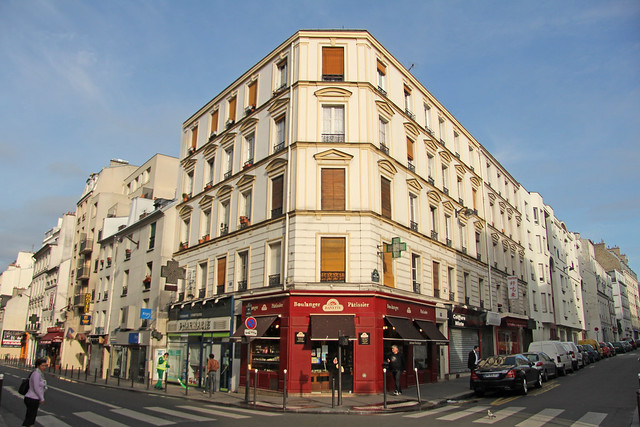
Walking along the rue Saint Blaise you can see that in comparison to the city's other ancient villages, Charonne is a scruffy place. On the passage des Deux Portes, an alleyway leading off from the rue Saint Blaise, arecent survey found 35 different species of wild plants growing through the cracks in the pavement – the highest number of any street in the Paris region! This discovery seems completely appropriate in an area which mixes cobblestones and concrete, ancient low-rises and 1970s high-rises.
It is though the scruffiness and disorganisation of this district that gives it its authenticity. On sun-trap squares you won't find the terraces of chic bars or restaurants, but instead groups of kids playing football.
These are the city back streets, where narrow winding roads and alleyways are barriers to motor traffic. It is the kingdom of the pedestrian, with the kind of small community aspect that would be impossible along the broad avenues and boulevards of the rest of Paris. Charonne has no particular sites to see, but many surprises, such as the old Petite Ceinture railway line which appears overhead near the busy rue des Pyrenées. Still technically operational today – and therefore forbidden to visitors – it offers an urban wilderness for the adventurous.
Thursday, 8 March 2012
old deptford 1902
 If ghosts should walk in Deptford, as very well they may,
 A man might find the night there more stirring than the day,
Might meet a Russian Tsar there, or see in Spain's despite
Queen Bess ride down to Deptford to dub Sir Francis knight.
And loitering here and yonder, and jostling to and fro,
In every street and alley the sailor-folk would go,
All colours, creeds, and nations, in fashion old and new,
If ghosts should walk in Deptford, as like enough they do.
And there'd be some with pigtails, and some with buckled shoes,
And smocks and caps like pirates that sailors once did use,
And high sea-boots and oilskins and tarry dungaree,
And shoddy suits men sold them when they came fresh from sea.
And there'd be stout old skippers and mates of mighty hand,
And Chinks and swarthy Dagoes, and Yankees lean and tanned,
And many a hairy shellback burned black from Southern skies,
And brassbound young apprentice with boyhood's eager eyes,
And by the river reaches all silver to the moon
You'd hear the shipwrights' hammers beat out a phantom tune,
The caulkers' ghostly mallets rub-dub their faint tattoo —
If ghosts should walk in Deptford, as very like they do.
If ghosts should walk in Deptford, and ships return once more
To every well-known mooring and old familiar shore,
A sight it were to see there, of all fine sights there be,
The shadowy ships of Deptford come crowding in from sea.
Cog, carrack, buss and dromond — pink, pinnace, snake and snow —
Queer rigs of antique fashion that vanished long ago,
With tall and towering fo'c'sles and curving carven prows,
And gilded great poop lanterns, and scrolled and swelling bows.
The Baltic barque that foundered in last month’s North Sea gales,
And last year's lost Cape Horner on her sails,
Black tramp and stately liner should lie there side by side
Ay, all should berth together upon that silent tide.
In dock and pond and basin so close the keels should lie
Their hulls should hide the water, their masts make dark the sky,
And through their tangled rigging the netted stars should gleam
Like gold and silver fishes from some celestial stream.
And all their quivering royals and all their singing spars
Should send a ghostly music a-shivering to the stars —
A sound like Norway forests when wintry winds are high,
Or old dead seamen's shanties from great old days gone by, —
Till eastward over Limehouse, on river, dock and slum,
All shot with pearl and crimson the London dawn should come,
And fast at flash of sunrise, and swift at break of day,
The shadowy ships of Deptford should melt like mist away.
Cicely Fox Smith (1 February 1882—8 April 1954) was an English poet and writer. Born in Lymm, Cheshire and educated at Manchester High School for Girls she briefly lived in Canada, before returning to the United Kingdom shortly before the outbreak of World War 1. She settled in Hampshire and began writing poetry, often with a nautical theme. Smith wrote over 600 poems in her life, for a wide range of publications. In later life, she expanded her writing to a number of subjects, fiction and non-fiction. For her services to literature, the British Government awarded her a small pension
Monday, 5 March 2012

Saturday, 10 September 2011
rome pasta
 Capo di Ferro - (Piazza San Cosimato in Trastevere) Dense, rich and meaty rigatoni alla coda vaccinara was awesome. They also make a good bucatini all’ amatriciana. It's just north of the piazza with few tables outside and several inside.
Ai Spaghettari –(www.aispaghettari.it- Piazza San Cosimato 58 in Trastevere) All the classics and the amatriciana and carbonara are exceptionally good. Plenty of outside tables to lunch and watch the end of market day in Piazza San Cosimato.

Agustarello – (Via Giovanni Branca 98 in Testaccio) Carbonara is one of the best, if not the best, in Rome. The rigatoni con pajata and amatriciana are also very good. It’s also one of the best spots for classic offal dishes of Rome.
Felice a Testaccio - (www.feliceatestaccio.it- Via Mastro Giorgio 29 in Testaccio ) First time there, I tried to walk up and get seated. I was alone and clearly a foreigner, so they didn’t seat me, even though there were plenty of empty tables—all with reserved signs. My next attempt was successful, probably because my Roman friend called to make reservations and joined me. All the pasta plates are fantastic, especially the cacio e pepe. They have an award-winning tiramisu’ that is a decadent end to a great meal.
Il Miraggio – (via della Lungara 16A in Trastevere) They make a delicateamatriciana with penne, which is great on a date. (Bucatini is definitely not a date-night dish.) It’s north of the bustling center of Trastevere. They have just a few outdoor tables that fill up fast with locals, but there is plenty of room inside the large high-ceiling space. Tables are covered with red-and-white checkered cloth. The setting is old-fashioned but many dishes are a twist on classics. The mussels amatriciana (amatriciana con le cozze) is as good as the penne.
Il Fico Ristorante - (www.ilfico.com - via di Monte Giordano 49 between the Tiber and Piazza Navona) House-made tonnarelli pasta combines with a creamy and peppery Cacio e Pepe. Antipasti are also great, especially the zucchini flowers stuffed with ricotta and baked.
Settimio al Pelligrino (via del Pellegrino 117 near Campo dei Fiori ) Family-owned restaurant where you must ring the doorbell to enter. They make Roman dishes in acasalinga (homemade) style, and every Thursday mamma makes pillow-likegnocchi.
Bucatino (via della Robbia Luca, 84/86 in Testaccio ) This casual corner trattoria was near my apartment, and I went there many times for the bucatini all’ amatriciana. My first time there, they gave me a bib to eat the bucatini, and were shocked when not one drop of sauce landed anywhere on the table, me or the bib. The waiters look like a cast from Grumpy Old Men, but their hearts are as big as their stomachs. Therigatoni con pajata is also very good.
Roma Sparita - (www.romasparita.com- Piazza Santa Cecilia in Trastevere) I was told by several Romans this is the place for Cacio e Pepe in Rome, and it is. The trattoria is in a piazza in a quiet part of Trastevere.
Da Gino - (Vicolo Rosini 4 north of the Pantheon ) Gnocchi on Thursday are one of the best I had in Rome. They also make a great carbonara with house-made tonnarelli, and the house dish of tonnarelli alla ciociara is Gino's most popular dish. The place is hidden away in an alleyway but packed with locals. I think I was the only American in the place. You dine under murals and on cloth covered tables, banging elbows with those jammed next to you.
Thursday, 17 March 2011
manor house
The Manor House Pub

The Original Manor House pub, looking north towards Harringay, c.1860The pub is the source of both the name of the tube station and the area. The first pub on the site was built by Thomas Widdows c. 1810 as a roadside tavern next to the turnpike on Green Lanes. The pub was within sight of the Hornsey Wood
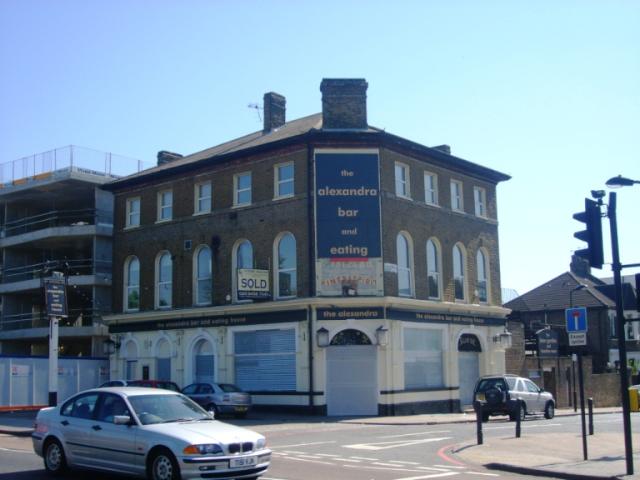 Tavern, which had been formed out of the old Copt Hall, the manor house of the Manor of Brownswood. It is likely its name was taken from this connection. Later in the century a tablet was placed on the pub with the following inscription:

“ QVEENE VICTORIA HALTED HERE
YE 25TH Oct A.D.
1843 ”
However, nothing more is known of the incident. Towards the end of the century the building was remodelled and modernised. In 1930 the old tavern was demolished and the current building erected. Behind the new building, offices were built for London Transport. Although the latter building still exists, TfL no longer occupies it.

In later years the pub was the first employer of Richard Desmond, now the owner of the Daily Express and Daily Star. The building also housed a nightclub that was popular among Goths in the mid-1980s. The ground floor of the building is now occupied by a branch of Costcutter.
Early developmentAfter the construction of the pub early in the 19th century, building continued on Green Lanes with the appearance in 1821 of a large house at the junction with Woodberry Down. Further north on Green Lanes, Northumberland House, a three-storeyed building with a pillared entrance, balustrade, and urns on its roof, had been built by 1824 just to the south of the New River.
very bad council work in woodberry down has resulted in the destruction of perfectly good flats destroyed for a new development of yuppie style neo lib dwellings, their failure to control the drugs scene of the estate due to them putting in a myriad of wrong tenants shows they have zero regard for green ideas and decent working class people
It was used as a private mental hospital until it was demolished in 1955; one of its most famous patients was Vivienne Haigh-Wood Eliot, first wife of the American poet T.S. Eliot, She lived at the hospital from 1938 until her death in 1947
A thatched cottage, with Gothic windows, was constructed on the boundary with the borough of Tottenham by 1825. Woodberry Down Cottages, four detached houses on the south side of Woodberry Down, had been built by 1829. With the development of Finsbury Park almost a certainty, the land to the south and east of the present-day park was acquired by the Ecclesiastical Commissioners as ideal for building. The park was laid out between 1857 and 1869 and the adjacent land was sold to builders.
During the 1860s, Thomas John Angell, who appears to have been a speculator rather than a builder built Finsbury Park Villas. This was a terrace of at least twelve houses, which, starting with the Finsbury Park Tavern, ran northward along Green Lanes from its junction with the new Woodberry Grove.
At around the same time building spread eastward along the north side of Seven Sisters Road, built by Angell and a London builder Thomas Oldis. From 1868 to 1870 large detached houses with gardens running down to the New River were built at the east end of Seven Sisters Road. In 1867 3 acres (12,000 m2) were leased on the southern side of the eastern end of the road, for the building of four detached or nine 'substantial' houses; three detached houses were built by 1871.
An architect, William Reddall of Finsbury, was one of those who leased the houses
Woodberry Down was laid out in 1868, when it was extended eastward from Lordship Road, and villas were built on the south side in the late 1860s. The area was the northern section of a district called Brownswood Park (named after Brownswood Manor) and was regarded as a particularly select suburb
However, with the increasing suburbanisation of the area, mainly for the middle and lower middle classes, many of the original families had moved out by 1895 and others were being replaced by poorer people in 1913. Social decline continued, until in 1954 the district was inhabited mainly by students, foreigners, and the working class, with most houses containing four or five families and all in decay
Twentieth Century redevelopment
Manor House tube station entrance on the western side of Green Lanes, north of Seven Sisters' RoadFrom 1949 through to the 1970s much of the area was redeveloped, the old houses being demolished and replaced with large council developments. One such development was Woodberry Down, a large council estate built shortly after the Second World War by the LCC to alleviate chronic housing shortages. The estate is currently subject to a phased redevelopment that will see modern flats built on the site.Manor House
The Original Manor House pub, looking north towards Harringay, c.1860The pub is the source of both the name of the tube station and the area. The first pub on the site was built by Thomas Widdows c. 1810 as a roadside tavern next to the turnpike on Green Lanes. The pub was within sight of the Hornsey Wood
“ QVEENE VICTORIA HALTED HERE
YE 25TH Oct A.D.
1843 ”
However, nothing more is known of the incident. Towards the end of the century the building was remodelled and modernised. In 1930 the old tavern was demolished and the current building erected. Behind the new building, offices were built for London Transport. Although the latter building still exists, TfL no longer occupies it.
In later years the pub was the first employer of Richard Desmond, now the owner of the Daily Express and Daily Star. The building also housed a nightclub that was popular among Goths in the mid-1980s. The ground floor of the building is now occupied by a branch of Costcutter.
Early developmentAfter the construction of the pub early in the 19th century, building continued on Green Lanes with the appearance in 1821 of a large house at the junction with Woodberry Down. Further north on Green Lanes, Northumberland House, a three-storeyed building with a pillared entrance, balustrade, and urns on its roof, had been built by 1824 just to the south of the New River.
very bad council work in woodberry down has resulted in the destruction of perfectly good flats destroyed for a new development of yuppie style neo lib dwellings, their failure to control the drugs scene of the estate due to them putting in a myriad of wrong tenants shows they have zero regard for green ideas and decent working class people
It was used as a private mental hospital until it was demolished in 1955; one of its most famous patients was Vivienne Haigh-Wood Eliot, first wife of the American poet T.S. Eliot, She lived at the hospital from 1938 until her death in 1947
A thatched cottage, with Gothic windows, was constructed on the boundary with the borough of Tottenham by 1825. Woodberry Down Cottages, four detached houses on the south side of Woodberry Down, had been built by 1829. With the development of Finsbury Park almost a certainty, the land to the south and east of the present-day park was acquired by the Ecclesiastical Commissioners as ideal for building. The park was laid out between 1857 and 1869 and the adjacent land was sold to builders.
During the 1860s, Thomas John Angell, who appears to have been a speculator rather than a builder built Finsbury Park Villas. This was a terrace of at least twelve houses, which, starting with the Finsbury Park Tavern, ran northward along Green Lanes from its junction with the new Woodberry Grove.
At around the same time building spread eastward along the north side of Seven Sisters Road, built by Angell and a London builder Thomas Oldis. From 1868 to 1870 large detached houses with gardens running down to the New River were built at the east end of Seven Sisters Road. In 1867 3 acres (12,000 m2) were leased on the southern side of the eastern end of the road, for the building of four detached or nine 'substantial' houses; three detached houses were built by 1871.
An architect, William Reddall of Finsbury, was one of those who leased the houses
Woodberry Down was laid out in 1868, when it was extended eastward from Lordship Road, and villas were built on the south side in the late 1860s. The area was the northern section of a district called Brownswood Park (named after Brownswood Manor) and was regarded as a particularly select suburb
However, with the increasing suburbanisation of the area, mainly for the middle and lower middle classes, many of the original families had moved out by 1895 and others were being replaced by poorer people in 1913. Social decline continued, until in 1954 the district was inhabited mainly by students, foreigners, and the working class, with most houses containing four or five families and all in decay
Twentieth Century redevelopment
Manor House tube station entrance on the western side of Green Lanes, north of Seven Sisters' RoadFrom 1949 through to the 1970s much of the area was redeveloped, the old houses being demolished and replaced with large council developments. One such development was Woodberry Down, a large council estate built shortly after the Second World War by the LCC to alleviate chronic housing shortages. The estate is currently subject to a phased redevelopment that will see modern flats built on the site.Manor House
Subscribe to:
Posts (Atom)