Thursday, 30 May 2013

Plum and goat’s cheese salad

Plum and goat’s cheese salad

Ingredients

  • 50g pecans
  • 2 tbsp caster sugar
  • 1 tbsp clear honey
  • 1 tsp vegetable oil
  • pinch of salt.
  • 100g seasonal baby leaf salad
  • 4 small, ripe Victoria plums, stoned and cut into eighths
  • 100g goat’s cheese, crumbled

  • For the dressing
  • 2 tbsp red wine vinegar
  • 3 tbsp extra virgin olive oil
  • 1 tbsp wholegrain mustard
  • salt
  • pinch of caster sugar

Method

  1. Preheat the oven to 200°C/180°C fan/Gas 6.
  2. In a small bowl, toss 50g pecans with 2 tbsp caster sugar, 1 tbsp clear honey, 1 tsp vegetable oil and a pinch of salt.
  3. Mix to coat well and arrange on a parchment-lined baking tray. Bake for 5-6 mins until golden then remove from the oven and cool.
  4. Arrange 100g seasonal baby leaf salad with 4 small, ripe Victoria plums, stoned and cut into eighths.
  5. Add the pecans and 100g goat’s cheese, crumbled.
  6. For the dressing, pour 2 tbsp red wine vinegar, 3 tbsp extra virgin olive oil and 1 tbsp wholegrain mustard into a small jar with a fitted lid. Season with salt and a pinch of caster sugar. Shake well and pour over the salad just before serving.

Thomas the poet

Philip Edward Thomas (3 March 1878 – 9 April 1917) was an Anglo-Welsh poet and essayist. He is commonly considered a war poet,

The flowers left thick at nightfall in the wood
This Eastertide call into mind the men,
Now far from home, who, with their sweethearts, should
Have gathered them and will do never again

. although few of his poems deal directly with his war experiences. Already an accomplished writer, Thomas turned to poetry only in 1914. In 1915, he enlisted in the British Army to fight in the First World War and was killed in action during the Battle of Arras in 1917, soon after he arrived in France.
This poem is one of the few poems that really hit me , I think its brilliant.
Adlestrop

Yes, I remember Adlestrop --
The name, because one afternoon
Of heat the express-train drew up there
Unwontedly. It was late June.

The steam hissed. Someone cleared his throat.
No one left and no one came
On the bare platform. What I saw
Was Adlestrop -- only the name

And willows, willow-herb, and grass,
And meadowsweet, and haycocks dry,
No whit less still and lonely fair
Than the high cloudlets in the sky.

And for that minute a blackbird sang
Close by, and round him, mistier,
Farther and farther, all the birds
Of Oxfordshire and Gloucestershire.
1Mi piace ·  · Promuovi · 

veggie enchiladas recipe

Healthy eating fact: Kidney beans are a valuable source of protein and fibre – you should aim to have at least 18g of fibre each day. They also contain iron, which helps transport oxygen around the body, and they count towards your five-a-day.
Veggie enchiladas

Ready in: 40 minutes
Serves: 4
Ingredients:
- extra virgin olive oil spray
- 1 onion, roughly chopped
- 2 cloves garlic, finely chopped
- 1 tbsp fajita spice mix
- 2 tbsp tomato purée
- 410g can baked beans
- 400g can kidney beans, drained and rinsed
- 300g can sweetcorn, drained and rinsed
- 4 flour tortillas
- 1 large avocado, peeled, stoned and diced
- 100g reduced-fat mature cheese, grated
Method:
1. Heat the oven to 200°C/400°F/gas 6 (180°C for fan ovens). Spray a large pan with a squirt of oil. Heat over a medium heat and cook the onion for 8 minutes, until softened.
2. Stir in the garlic, fajita seasoning and tomato purée, then cook for another minute. Add the baked beans, kidney beans, sweetcorn and 150ml water. Bring to the boil and cook for 8-10 minutes to heat through.
3. Stir though the avocado and divide most of the bean mixture among the flour tortillas, keeping a couple of spoonfuls back. Top with two thirds of the cheese.
Eat Well4. Roll up the tortillas and place in a baking dish. Spoon over the remaining bean mixture and scatter with the rest of the cheese. Place in the oven and bake for 15 minutes until the cheese is golden.
Per serving: 460 calories, 24g protein, 27.5g carbohydrates, 10.9g sugar, 14.1g fat (4.8g saturated), 19.3g fibre, 1.71g salt. 2 of your 5 a day.

bernardo bellotto view of turin

Foto: bernardo bellotto view of turin

THERE IS NO AL QAEDA

Shortly before his untimely death, former British Foreign Secretary Robin Cook told the House of Commons that “Al Qaeda” is not really a terrorist group but a database of international mujaheddin and arms smugglers used by the CIA and Saudis to funnel guerrillas, arms, and money into Soviet-occupied Afghanistan. Courtesy of World Affairs, a journal based in New Delhi, WMR can bring you an important excerpt from an Apr.-Jun. 2004 article by Pierre-Henry Bunel, a former agent for French military intelligence.

Wayne Madsen Report

“I first heard about Al-Qaida while I was attending the Command and Staff course in Jordan. I was a French officer at that time and the French Armed Forces had close contacts and cooperation with Jordan . . .

“Two of my Jordanian colleagues were experts in computers. They were air defense officers. Using computer science slang, they introduced a series of jokes about students’ punishment.

“For example, when one of us was late at the bus stop to leave the Staff College, the two officers used to tell us: ‘You’ll be noted in ‘Q eidat il-Maaloomaat’ which meant ‘You’ll be logged in the information database.’ Meaning ‘You will receive a warning . . .’ If the case was more severe, they would used to talk about ‘Q eidat i-Taaleemaat.’ Meaning ‘the decision database.’ It meant ‘you will be punished.’ For the worst cases they used to speak of logging in ‘Al Qaida.’

“In the early 1980s the Islamic Bank for Development, which is located in Jeddah, Saudi Arabia, like the Permanent Secretariat of the Islamic Conference Organization, bought a new computerized system to cope with its accounting and communication requirements. At the time the system was more sophisticated than necessary for their actual needs.

“It was decided to use a part of the system’s memory to host the Islamic Conference’s database. It was possible for the countries attending to access the database by telephone: an Intranet, in modern language. The governments of the member-countries as well as some of their embassies in the world were connected to that network.

“[According to a Pakistani major] the database was divided into two parts, the information file where the participants in the meetings could pick up and send information they needed, and the decision file where the decisions made during the previous sessions were recorded and stored. In Arabic, the files were called, ‘Q eidat il-Maaloomaat’ and ‘Q eidat i-Taaleemaat.’ Those two files were kept in one file called in Arabic ‘Q eidat ilmu’ti’aat’ which is the exact translation of the English word database. But the Arabs commonly used the short word Al Qaida which is the Arabic word for “base.” The military air base of Riyadh, Saudi Arabia is called ‘q eidat ‘riyadh al ‘askariya.’ Q eida means “a base” and “Al Qaida” means “the base.”

“In the mid-1980s, Al Qaida was a database located in computer and dedicated to the communications of the Islamic Conference’s secretariat.

“In the early 1990s, I was a military intelligence officer in the Headquarters of the French Rapid Action Force. Because of my skills in Arabic my job was also to translate a lot of faxes and letters seized or intercepted by our intelligence services . . . We often got intercepted material sent by Islamic networks operating from the UK or from Belgium.

“These documents contained directions sent to Islamic armed groups in Algeria or in France. The messages quoted the sources of statements to be exploited in the redaction of the tracts or leaflets, or to be introduced in video or tapes to be sent to the media. The most commonly quoted sources were the United Nations, the non-aligned countries, the UNHCR and . . . Al Qaida.

“Al Qaida remained the data base of the Islamic Conference. Not all member countries of the Islamic Conference are ‘rogue states’ and many Islamic groups could pick up information from the databases. It was but natural for Osama Bin Laden to be connected to this network. He is a member of an important family in the banking and business world.

“Because of the presence of ‘rogue states,’ it became easy for terrorist groups to use the email of the database. Hence, the email of Al Qaida was used, with some interface system, providing secrecy, for the families of the mujaheddin to keep links with their children undergoing training in Afghanistan, or in Libya or in the Beqaa valley, Lebanon. Or in action anywhere in the battlefields where the extremists sponsored by all the ‘rogue states’ used to fight. And the ‘rogue states’ included Saudi Arabia. When Osama bin Laden was an American agent in Afghanistan, the Al Qaida Intranet was a good communication system through coded or covert messages.

Meet “Al Qaeda”

“Al Qaida was neither a terrorist group nor Osama bin Laden’s personal property . . . The terrorist actions in Turkey in 2003 were carried out by Turks and the motives were local and not international, unified, or joint. These crimes put the Turkish government in a difficult position vis-a-vis the British and the Israelis. But the attacks certainly intended to ‘punish’ Prime Minister Erdogan for being a ‘toot tepid’ Islamic politician.

” . . . In the Third World the general opinion is that the countries using weapons of mass destruction for economic purposes in the service of imperialism are in fact ‘rogue states,” specially the US and other NATO countries.

” Some Islamic economic lobbies are conducting a war against the ‘liberal” economic lobbies. They use local terrorist groups claiming to act on behalf of Al Qaida. On the other hand, national armies invade independent countries under the aegis of the UN Security Council and carry out pre-emptive wars. And the real sponsors of these wars are not governments but the lobbies concealed behind them.

Foto: Shortly before his untimely death, former British Foreign Secretary Robin Cook told the House of Commons that “Al Qaeda” is not really a terrorist group but a database of international mujaheddin and arms smugglers used by the CIA and Saudis to funnel guerrillas, arms, and money into Soviet-occupied Afghanistan. Courtesy of World Affairs, a journal based in New Delhi, WMR can bring you an important excerpt from an Apr.-Jun. 2004 article by Pierre-Henry Bunel, a former agent for French military intelligence.      Wayne Madsen Report      “I first heard about Al-Qaida while I was attending the Command and Staff course in Jordan. I was a French officer at that time and the French Armed Forces had close contacts and cooperation with Jordan . . .      “Two of my Jordanian colleagues were experts in computers. They were air defense officers. Using computer science slang, they introduced a series of jokes about students’ punishment.      “For example, when one of us was late at the bus stop to leave the Staff College, the two officers used to tell us: ‘You’ll be noted in ‘Q eidat il-Maaloomaat’ which meant ‘You’ll be logged in the information database.’ Meaning ‘You will receive a warning . . .’ If the case was more severe, they would used to talk about ‘Q eidat i-Taaleemaat.’ Meaning ‘the decision database.’ It meant ‘you will be punished.’ For the worst cases they used to speak of logging in ‘Al Qaida.’      “In the early 1980s the Islamic Bank for Development, which is located in Jeddah, Saudi Arabia, like the Permanent Secretariat of the Islamic Conference Organization, bought a new computerized system to cope with its accounting and communication requirements. At the time the system was more sophisticated than necessary for their actual needs.      “It was decided to use a part of the system’s memory to host the Islamic Conference’s database. It was possible for the countries attending to access the database by telephone: an Intranet, in modern language. The governments of the member-countries as well as some of their embassies in the world were connected to that network.      “[According to a Pakistani major] the database was divided into two parts, the information file where the participants in the meetings could pick up and send information they needed, and the decision file where the decisions made during the previous sessions were recorded and stored. In Arabic, the files were called, ‘Q eidat il-Maaloomaat’ and ‘Q eidat i-Taaleemaat.’ Those two files were kept in one file called in Arabic ‘Q eidat ilmu’ti’aat’ which is the exact translation of the English word database. But the Arabs commonly used the short word Al Qaida which is the Arabic word for “base.” The military air base of Riyadh, Saudi Arabia is called ‘q eidat ‘riyadh al ‘askariya.’ Q eida means “a base” and “Al Qaida” means “the base.”      “In the mid-1980s, Al Qaida was a database located in computer and dedicated to the communications of the Islamic Conference’s secretariat.      “In the early 1990s, I was a military intelligence officer in the Headquarters of the French Rapid Action Force. Because of my skills in Arabic my job was also to translate a lot of faxes and letters seized or intercepted by our intelligence services . . . We often got intercepted material sent by Islamic networks operating from the UK or from Belgium.      “These documents contained directions sent to Islamic armed groups in Algeria or in France. The messages quoted the sources of statements to be exploited in the redaction of the tracts or leaflets, or to be introduced in video or tapes to be sent to the media. The most commonly quoted sources were the United Nations, the non-aligned countries, the UNHCR and . . . Al Qaida.      “Al Qaida remained the data base of the Islamic Conference. Not all member countries of the Islamic Conference are ‘rogue states’ and many Islamic groups could pick up information from the databases. It was but natural for Osama Bin Laden to be connected to this network. He is a member of an important family in the banking and business world.      “Because of the presence of ‘rogue states,’ it became easy for terrorist groups to use the email of the database. Hence, the email of Al Qaida was used, with some interface system, providing secrecy, for the families of the mujaheddin to keep links with their children undergoing training in Afghanistan, or in Libya or in the Beqaa valley, Lebanon. Or in action anywhere in the battlefields where the extremists sponsored by all the ‘rogue states’ used to fight. And the ‘rogue states’ included Saudi Arabia. When Osama bin Laden was an American agent in Afghanistan, the Al Qaida Intranet was a good communication system through coded or covert messages.      Meet “Al Qaeda”      “Al Qaida was neither a terrorist group nor Osama bin Laden’s personal property . . . The terrorist actions in Turkey in 2003 were carried out by Turks and the motives were local and not international, unified, or joint. These crimes put the Turkish government in a difficult position vis-a-vis the British and the Israelis. But the attacks certainly intended to ‘punish’ Prime Minister Erdogan for being a ‘toot tepid’ Islamic politician.      ” . . . In the Third World the general opinion is that the countries using weapons of mass destruction for economic purposes in the service of imperialism are in fact ‘rogue states,” specially the US and other NATO countries.      ” Some Islamic economic lobbies are conducting a war against the ‘liberal” economic lobbies. They use local terrorist groups claiming to act on behalf of Al Qaida. On the other hand, national armies invade independent countries under the aegis of the UN Security Council and carry out pre-emptive wars. And the real sponsors of these wars are not governments but the lobbies concealed behind them.      “The truth is, there is no Islamic army or terrorist group called Al Qaida. And any informed intelligence officer knows this. But there is a propaganda campaign to make the public believe in the presence of an identified entity representing the ‘devil’ only in order to drive the ‘TV watcher’ to accept a unified international leadership for a war against terrorism. The country behind this propaganda is the US and the lobbyists for the US war on terrorism are only interested in making money.”      In yet another example of what happens to those who challenge the system, in December 2001, Maj. Pierre-Henri Bunel was convicted by a secret French military court of passing classified documents that identified potential NATO bombing targets in Serbia to a Serbian agent during the Kosovo war in 1998. Bunel’s case was transferred from a civilian court to keep the details of the case classified. Bunel’s character witnesses and psychologists notwithstanding, the system “got him” for telling the truth about Al Qaeda and who has actually been behind the terrorist attacks commonly blamed on that group. It is noteworthy that that Yugoslav government, the government with whom Bunel was asserted by the French government to have shared information, claimed that Albanian and Bosnian guerrillas in the Balkans were being backed by elements of “Al Qaeda.” We now know that these guerrillas were being backed by money provided by the Bosnian Defense Fund, an entity established as a special fund at Bush-influenced Riggs Bank and directed by Richard Perle and Douglas Feith.   "The truth is, there is no Islamic army or terrorist group called Al Qaida. And any informed intelligence officer knows this. But there is a propaganda campaign to make the public believe in the presence of an identified entity representing the 'devil' only in order to drive the TV watcher to accept a unified international leadership for a war against terrorism. The country behind this propaganda is the US . . ." -- Pierre-Henri Bunel“The truth is, there is no Islamic army or terrorist group called Al Qaida. And any informed intelligence officer knows this. But there is a propaganda campaign to make the public believe in the presence of an identified entity representing the ‘devil’ only in order to drive the ‘TV watcher’ to accept a unified international leadership for a war against terrorism. The country behind this propaganda is the US and the lobbyists for the US war on terrorism are only interested in making money.”
In yet another example of what happens to those who challenge the system, in December 2001, Maj. Pierre-Henri Bunel was convicted by a secret French military court of passing classified documents that identified potential NATO bombing targets in Serbia to a Serbian agent during the Kosovo war in 1998. Bunel’s case was transferred from a civilian court to keep the details of the case classified. Bunel’s character witnesses and psychologists notwithstanding, the system “got him” for telling the truth about Al Qaeda and who has actually been behind the terrorist attacks commonly blamed on that group. It is noteworthy that that Yugoslav government, the government with whom Bunel was asserted by the French government to have shared information, claimed that Albanian and Bosnian guerrillas in the Balkans were being backed by elements of “Al Qaeda.” We now know that these guerrillas were being backed by money provided by the Bosnian Defense Fund, an entity established as a special fund at Bush-influenced Riggs Bank and directed by Richard Perle and Douglas Feith.


"The truth is, there is no Islamic army or terrorist group called Al Qaida. And any informed intelligence officer knows this. But there is a propaganda campaign to make the public believe in the presence of an identified entity representing the 'devil' only in order to drive the TV watcher to accept a unified international leadership for a war against terrorism. The country behind this propaganda is the US . . ." -- Pierre-Henri Bunel

Baudelaire

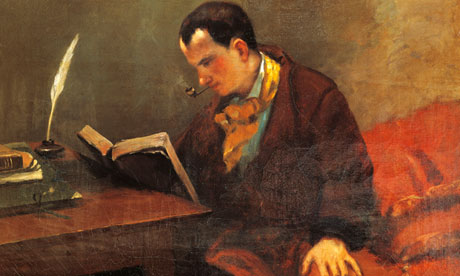
Portrait of Charles BaudelaireWritten more than 10 years before Les Fleurs du MalFanfarlo is Baudelaire's only work of fictional prose. This slender volume, part ofMelville House's The Art of the Novella series, is an exercise in loosely fictional autobiography. It tells the story of a young poet, Samuel Cramer, who in trying to assist his childhood friend Mme de Cosmelly, a woman whose husband has become transfixed with a charismatic, attractive dancer, Fanfario, ends up falling for her himself. As a result of his obsession his creative fire falters and he finds himself sliding towards a life of commerce.
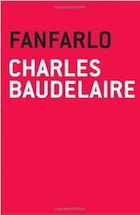
  1. Fanfarlo (Art of the Novella)
  2. by Charles Baudelaire
  1. Tell us what you think:Star-rate and review this book
Though the character of Fanfarlo is supposed to be based on Jeanne Duval, the Haitian-born actress and dancer who was Baudelaire's muse and lover, it's the depiction of Samuel – his ideals, his dreams, his vices, his many contradictions – that is most intriguing. This portrait of the poet as a young dandy is full of wit and beauty, lightly underscored by cynicism.
Samuel is a "fantastical and sickly creature, whose poetry shines forth much more in person than in his works". He's capable of genius but also great idleness; he's lazy, "pitifully ambitious, and famous for unhappiness"; moth-like in his manner, he's constantly drawn to the bright and the new. He glories in Fanfarlo's paint, her rouge, the glitter and the gloss of her, the gleaming muscular limbs of the dancer. They lose themselves in a tangle of bed sheets and fine wine and food laced with truffle.
It's a charmingly self-parodic portrait though it feels as if the protagonist disappoints the author in his predictableness, the ease with which he gives in. The character of Fanfarlo, meanwhile, pirouettes on the edge of things; she's harder to see, much less clearly defined, more a notion than a person, a silky sensual being fond of rare meat and potent wines, a dangerous domestic snare for the hot-headed young artist, a rock submerged in a turbulent sea.

gnocchi rucola e pecorino

Oggi vi proponiamo la ricetta degli gnocchi rucola e pecorino, un sostanzioso primo piatto da preparare in tempo record. Un piatto ricco e saporito quasi un piatto unico da preparare con pochi ingredienti.

Ingredienti x 4 persone:gnocchi rucola e pecorino

350 gr di gnocchi
2 mazzetti di rucola pulita
100 gr di pecorino grattugiato
1spicchio di aglio
1 peperoncino piccante
olio di oliva extravergine
sale

Preparazione:

1)Lavare la rucola
3)In pentola portare ad ebollizione abbondante acqua salata, e versare la rucola insieme agli gnocchi
4)Nel frattempo in una padella dai bordi alti fare l’aglio con 5 cucchiai di olio e peperoncino.
5)Togliere l’aglio ed il peperoncino, unire gli gnocchi e la rucola per scolati e ripassare per due minuti
6)Spolverare con il pecorino e servire ben caldi