I am haunted by no phantoms. It is rather that the ashes I stir up contain the crystallization that hold the image (reduced or synthetic) of the living and impure beings that they constituted before the intervention of the fire. If life has a meaning, this image (from the beyond?) has perhaps some significance. That is what I should like to know. And it is why I write."
 Blaise Cendrars
1961: three days after receiving the Paris Grand Prix, confined to a wheelchair following a series of strokes, Blaise Cendrars dies.
The world, in that instant, grows perceptibly smaller.


1.
BLAISE CENDRARS"Whenever Cendrars appeared, life shed its conventions and turned marvelous," said friend Jacques-Henry Lévesque.

- Back then I was still young
I was barely sixteen but my childhood memories were gone
I was miles away from where I was born
I was in Naples, city of a thousand and three bell towers and a thousand whores
And my eyes were shining down those old roads
And I was already such a bad artist
That I didn't know how to take it all the way
‘What a writer learns from Cendrars is to follow his nose, to obey life’s commands, to worship no other god but life.’ – Henry Miller
One of the greatest literary injustices of our time is the relative obscurity of the French writer Blaise Cendrars, poet, novelist, soldier, mechanic, traveller, film-maker. He deserves to be recognized as one of the most original and outrageous writers of the early twentieth century.
Swiss poet and novelist, who wrote in French and spent much of his life traveling restlessly. Blaise Cendrars did his best to fictionalize his past and his biographers have had much difficulties separating fact from fabulations: "truth is imaginary", he once said. Cendrars's most famous novels, Sutter's Gold and Moravagine, both from 1926, have been translated into more than twenty languages.
“I straighten my papers
I set up a schedule
My days will be busy
I don't have a minute to lose
I write.”
(from Complete Poems, 1992, tr. Ron Padgett)
Blaise Cendrars was born Frédéric Louis Sauser in the small city of La Chaux-de-Fonds.
 His parents were both Swiss but later Cendrars claimed that his mother was Scottish, and he was born on an Italian railway train during his mother's journey back from Egypt. Cendrars was educated in Neuchâtel, and later in Basle and Berne. At the age of 15 he ran way home –
 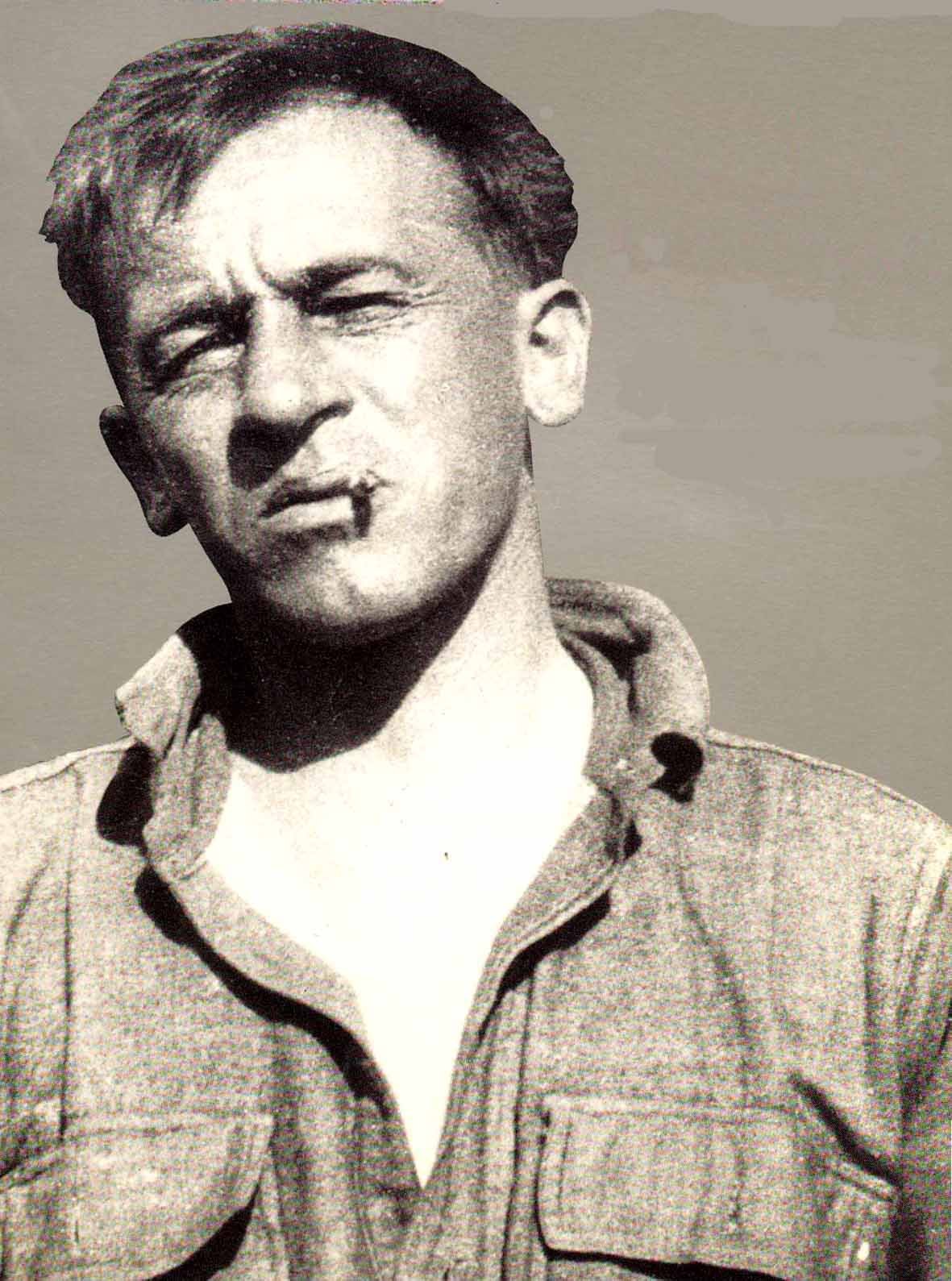 according to a story he escaped from his parents but another version tells his family gave up keeping him in school. Cendrars worked in Russia as an apprentice watchmaker and was there during the Revolution of 1905. In 1907 he entered the university of Berne but settled in 1910 in Paris, adopting French citizenship.
During his life Cendrars worked worked at a variety of jobs – as a film maker, journalist, art critic, and businessman. Before becoming writer he even tried horticulture and never stopped trying to earn his living by extra-literary activities. His cosmopolitan wanderings Cendrars used as a way to discover inner truths.
In World Authors 1900-1950 (vol. 1, ed. by Martin Seymour-Smith and Andrew C. Kimmens, 1996) he wrote that in his youth he traveled widely in China, Mongolia, Siberia, Persia, the Caucasus and Russia, and later in the Unites States, Canada, South America, and Africa. Some doubts have arisen whether he stoked trains in China in his youth, but perhaps this is more important from the biographical point of view than literary – the memoirs of Marco Polo, Cellini and Casanova and the autobiographical novels of Jean Genet and Henri Charrière are read in spite of reliability in all biographical details. Like the protagonist of Les confessions de Dan Yack (1928), Cendrars was a man of action, who avoided "literary" flavor in his prose, and a man of contemplation, who had almost obsessive need for exotic experiences. In Les Pâques à New York (1912, Easter in New York) he said: "Still, Lord, I took a dangerous voyage / To see a beryl intaglio
 of your image. / Lord, make my face, buried in my hands, / Leave there its agonizing mask." The poems was was prompted by his penniless stay in New York
and mixed despair with excitement of modern city living.
Cendrars was considered along with Apollinaire, whom he deeply influenced, a leading figure in the literary avant-garde before and after World War I. In his early experimental poems Cendrars used pieces of newsprint, the multiple focus, simultaneous impressions, and other modernist techniques. La prose du Transibérien et de la petite Jeanne de France (1913), a combination of travelogue and lament, was printed on two-meter pages with parallel abstract paintings by the Russian-born painter Sonia Delaunay. Le Panama ou les aventures de mes sept oncles (1918) was in the form of a pocket timetable. Cendrars was closely associated with Cubism but he also published poetry Jacques Vache's Lettres de guerre, which was edited by Philippe Soupault, André Breton and Louis Aragon – founders of surrealism in literature.
Prose of the Transsiberian & of Little Jeanne of France contains impressions from Cendrars's real or imaginary journey from Moscow to Manchuria during the 1905 Revolution and Sino-Russian War. As the train of the title speeds through the vast country, Cendrars mixes with its movement images of war, apocalyptic visions of disaster, and fates of people wounded by the great events. With Abel Gance he cooperated in J'Accuse (1919), an antiwar documentary, and La Roue (1921-24), originally a nine-hour movie of a railwayman, which is acclaimed for its innovative cutting.
Cendrars traveled incessantly and after 1914 became involved in the movie industry in Italy, France, and the United States. During World War I Cendrars joined the army. He served as a corporal and lost in 1915 in combat on the Marne front his right arm.
Cendrars's first wife was Féla Poznanska; they had three children. In 1924 Cendrars met in Paris the American writers John Dos Passos and Hemingway. Ten years later he became friends with Henry Miller; their correspondence was published in 1995 in English. Miller hailed him as the man "exploding in all directions at once." During a two-week stay in 1936 in Hollywood he wrote his impressions for Paris-Soir in series of articles which were collected in Hollywood, la mecque du cinéma (1936). It depicts with wry humour the movie industry and the town's people. Films were one of Cendrars's passions. In the 1930s Cendrars planned to travel round the world to film such phenomena as levitation and ritual dances. By 1925 Cendrars had ceased to publish poetry. His famous prose works in the 1920s include L'or (Sutter's Gold), a fictionalized story of John Sutter, a Swiss pioneer, who started the great gold rush in the northern California, built there his own empire but died in poverty. According to a literary anecdote, Stalin kept this book on his night table. Sutter's Gold can be read as the author's exploration of his inner self, like the semi-autobiographical novel Moravagine ('Death to the vagina'),
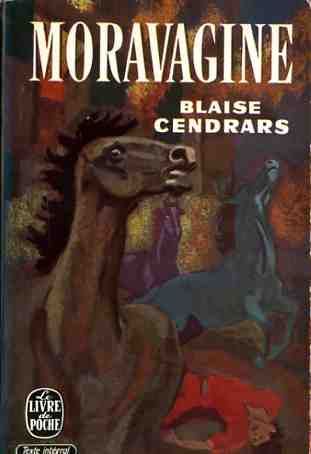 which followed a madman, a descendant of the last King of Hungary, and a young doctor on their worldwide adventures from the Russian Revolution and to the First World War. Moravinge's madness becomes comparable with the dissolution of world and the chaotic disorder of life. "There is no truth. There's only action, action obeying a million different impulses, ephemeral action, action subjected to every possible imaginable contingency and contradiction. Life." Moravigne dies in an another asylum and the manuscript of the story finds it way to Cendrars, one of the characters in it.
Cendrars was considered along with Apollinaire, whom he deeply influenced, a leading figure in the literary avant-garde before and after World War I. In his early experimental poems Cendrars used pieces of newsprint, the multiple focus, simultaneous impressions, and other modernist techniques. La prose du Transibérien et de la petite Jeanne de France (1913), a combination of travelogue and lament, was printed on two-meter pages with parallel abstract paintings by the Russian-born painter Sonia Delaunay. Le Panama ou les aventures de mes sept oncles (1918) was in the form of a pocket timetable. Cendrars was closely associated with Cubism but he also published poetry Jacques Vache's Lettres de guerre, which was edited by Philippe Soupault, André Breton and Louis Aragon – founders of surrealism in literature.
Prose of the Transsiberian & of Little Jeanne of France contains impressions from Cendrars's real or imaginary journey from Moscow to Manchuria during the 1905 Revolution and Sino-Russian War. As the train of the title speeds through the vast country, Cendrars mixes with its movement images of war, apocalyptic visions of disaster, and fates of people wounded by the great events. With Abel Gance he cooperated in J'Accuse (1919), an antiwar documentary, and La Roue (1921-24), originally a nine-hour movie of a railwayman, which is acclaimed for its innovative cutting.
Cendrars traveled incessantly and after 1914 became involved in the movie industry in Italy, France, and the United States. During World War I Cendrars joined the army. He served as a corporal and lost in 1915 in combat on the Marne front his right arm.
Cendrars's first wife was Féla Poznanska; they had three children. In 1924 Cendrars met in Paris the American writers John Dos Passos
and Hemingway. Ten years later he became friends with Henry Miller; their correspondence was published in 1995 in English. Miller hailed him as the man "exploding in all directions at once." During a two-week stay in 1936 in Hollywood he wrote his impressions for Paris-Soir in series of articles which were collected in Hollywood, la mecque du cinéma (1936). It depicts with wry humour the movie industry and the town's people. Films were one of Cendrars's passions. In the 1930s Cendrars planned to travel round the world to film such phenomena as levitation and ritual dances. By 1925 Cendrars had ceased to publish poetry. His famous prose works in the 1920s include L'or (Sutter's Gold), a fictionalized story of John Sutter, a Swiss pioneer, who started the great gold rush in the northern California, built there his own empire but died in poverty. According to a literary anecdote, Stalin kept this book on his night table. Sutter's Gold can be read as the author's exploration of his inner self, like the semi-autobiographical novel Moravagine ('Death to the vagina'), which followed a madman, a descendant of the last King of Hungary, and a young doctor on their worldwide adventures from the Russian Revolution and to the First World War. Moravinge's madness becomes comparable with the dissolution of world and the chaotic disorder of life. "There is no truth. There's only action, action obeying a million different impulses, ephemeral action, action subjected to every possible imaginable contingency and contradiction. Life." Moravigne dies in an another asylum and the manuscript of the story finds it way to Cendrars, one of the characters in it.The Russian filmmaker Sergei Eisenstein tried to arose Hollywood's interest in Sutter's Gold on his trip there in the 1930s. The director William Wyler obtained a scenario that Eisenstein had prepared and read plays based on the life of Sutter, including Bruno Frank's The General and the Gold and Caesar von Arx's John Augustus Sutter. Cendrars offered Wyler his services as a screenwriter, and hopefully wrote: "Should this film be succesful, I have several other first-class American scenarios." After Universal engaged William Anthony McGuire, Cendrars offered to read the script "absolutely gratis." However, Wyler was pulled off the project and Howard Hawks was assigned to it. Eventually James Cruze directed the film version, which was released in 1936. It was one of the studio's major flops of the year, and started the exit of Carl Laemmle from the chairman's office. Most of the action footage was reused in Mutiny on the Blackhawk (1939).
During the German occupation of France from 1940 to 1944 Cendrars was listed as a Jewish writer of "French expression". His younger son was killed in an accident while escorting American planes in Morocco. Cendrars started to publish in the late 1940s memoirs, which combined travel fantasies with colorful episodes from his life. In L'homme foudroyé (1945, The Astonished Man) Cendrars walks around between lines of World War I trenches, spends time with gypsies in a travelling theatre, and attempts to drive across a South American swamp. "I am haunted by no phantoms. It is rather that the ashes I stir up contain the crystallization that hold the image (reduced or synthetic) of the living and impure beings that they constituted before the intervention of the fire. If life has a meaning, this image (from the beyond?) has perhaps some significance. That is what I should like to know. And it is why I write."
In 1949 Cendrars married Raymone Duchateau, an actress who he had first met the late 1910s. Cendrars's final novel was Emmène-moi au bout du monde! (1953, To the End of the World), set in the Parisian theater world of the late 1940s. In 1957 he had a stroke. Cendrars received the Paris Grand Prix for literature in 1961, a recognition which almost came too late. Blaise Cendrars died a few days later on January 21, 1961, in Paris.
.
During the German occupation of France from 1940 to 1944 Cendrars was listed as a Jewish writer of "French expression". His younger son was killed in an accident while escorting American planes in Morocco. Cendrars started to publish in the late 1940s memoirs, which combined travel fantasies with colorful episodes from his life. In L'homme foudroyé (1945, The Astonished Man) Cendrars walks around between lines of World War I trenches, spends time with gypsies in a travelling theatre, and attempts to drive across a South American swamp. "I am haunted by no phantoms. It is rather that the ashes I stir up contain the crystallization that hold the image (reduced or synthetic) of the living and impure beings that they constituted before the intervention of the fire. If life has a meaning, this image (from the beyond?) has perhaps some significance. That is what I should like to know. And it is why I write."
In 1949 Cendrars married Raymone Duchateau, an actress who he had first met the late 1910s. Cendrars's final novel was Emmène-moi au bout du monde! (1953, To the End of the World), set in the Parisian theater world of the late 1940s. In 1957 he had a stroke. Cendrars received the Paris Grand Prix for literature in 1961, a recognition which almost came too late. Blaise Cendrars died a few days later on January 21, 1961, in Paris.
.
Blaise Cendrars , pseudonym of Frederic-Louis Sauser(September 1st, 1887 - January 21st, 1961), is a writer of Swiss origin, naturalized French in 1916.
Very early, it placed its work under the sign of the voyage and the adventure. In its Poetry as in its works in Prose, the exaltation of the modern world mixes at his place with the will to create a legend where the imaginary one mixes with the inextricable reality of way.
Engaged in the French Army like foreign volunteer, it takes part in the First World War. September 28th, 1915, it loses with the combat its right hand, its hand of writer, amputated above the elbow. This wound marks the work of Cendrars deeply. While making him discover its identity of left-handed person, it upset his report/ratio with the writing.
Biography
Years of training
Frederic-Louis Sauser was born on September 1st, 1887 with La Chaux-de-Fonds (Canton of Neuchâtel), in a middle-class family of Bernese origin but French-speaking. The voyages of his/her father, an unstable business man, make lead to the family an itinerant life, in particular to Naples. Envoy in boarding school inGermany, Freddy running away. With Neuchâtel, his/her parents register it at the Business school for studies which are little of its taste.
In 1904, its bad school results make it send in training to Moscowand especially to Saint-Pétersbourg, then in full revolutionary effervescence. Until 1907, it works there in a Swiss clock and watch maker. With the imperial Library, of which it becomes one accustomed, a librarian, R.R., encourage it to write. Freddy starts to note his readings, his thoughts.
He would then have written the Legend of Novgorode, the white gold and silence . To make him a surprise, R.R. would have translated it into Russian and makes print with 14 specimens in white on black paper. The alive one of Cendrars, nobody forever considering this book which it however made appear at the head all his bibliographies starting from Séquences (1913). Many doubted its existence, when a Bulgarian poet discovered a specimen of it, in 1995, in a secondhand bookseller of Sofia. Since then, the authenticity of this plate is the subject of controversies, which enriches mythology by the poet of new episodes.
In 1907 Freddy Sauser returns to Switzerland. Studying medicine at the university of Bern, it perhaps met Adolf Wölfli, interned with the asylum of Waldau. This schizophrene violate who is a genious draftsman could be one of the models of Moravagine, the " large deer humain" who will obsess Cendrars like a double during long years. As for academic works, they bring little answers to the questions which haunt it on the man, its psychism, its behavior. Under the influence of the Latin mystic Remy de Gourmont, it writes his first poems: Sequences . of
After a short stay in Paris, it turns over in 1911, for a few months, with Saint-Pétersbourg. It written its first novel there,Moganni Nameh which will appear only in 1922, in serial, in the review free Sheets . It is plunged in Schopenhauer; a formula of this philosopher illuminates his report/ratio with reality: “the world is my representation”. From now on, the life and poetry will be for him communicating vases.
Entry of modernity
End 1911, Freddy embarks for New York where it joined a friend, Féla Poznanska, a Polish Jewish coed whom it met in Bern. He will marry it thereafter and she will be the mother of her three children, Odilon, Rémy and Miriam. Its stay in the United States shows him the way, news and subjected to the laws of mechanics, speed, of the modernity, in which the world engages. With leaving one night of wandering, it writes its first long poem, Easter in New York , a poem founder of modern poetry. To sign it he invents a pseudonym: Blaise Cendrars .It returns to Paris during the summer 1912, convinced of its poetic vocation. With Emil Szittya, an anarchistic writer , it founds the New men , a review and a publisher where it publishesEaster , then Séquences , a collection of older poems of declining inspiration, marked by the influence of Remy de Gourmontwhich it admires like a Master. Séquences belongs more to Freddy Sauser that in Cendrars, even if it signs it of his pseudonym. It binds friendship with artistic and literary personalities: Apollinaire and artists of the school of Paris, Chagall, Leger, Survage, Modigliani, Csaky, Archipenko, Robert. In 1913, it publishes the Prose of Trans-Siberian and the small Jeanne de France , with compositions colors of Sonia Delaunay-Terk. In this first simultaneous book, the text and the image are narrowly overlapping to create a new artistic emotion, which will be at the origin of a sharp polemic. This two meters height poem-table, presented in the form of folder, is recognized today as a major contribution to the history of the book. To the declaration of the war, Cendrars launches with the Italian writer Ricciotto Canudo a call to the foreign artists who live in France, and engages like volunteer in the French Army . Poured in the Foreign legion, it loses its right-hand man during the great Champagne offensive, on September 28th, 1915.
The poet of the left hand
After a “terrible year”, the poet penguin goes back to write left hand and it publishes the War in Luxembourg (1916). It is naturalized meanwhile French, on February 16th, 1916. During the summer 1917, which it passes to Méréville, it discovers its new identity of man and poet of the left hand, while writing, during its “more beautiful night of writing”, on September 1st,the End of the world filmed by the Angel NR. - D. Commence then an intense creative working life placed under the guardian sign of the constellation of Orion, in which the right hand of the poet was exiled. In I killed (1918), first book illustrated by Fernand Leger,he writes some of the strongest pages and more dérangeantes which was written on the war:
Thousand million individuals devoted me all their one day activity, their force, their talent, their science, their intelligence, their practices, their feelings, their heart. And here that today I have the knife with the hand. Eustace de Bonnot. “Humanity Lives! ” I palpate a cold summoned truth of a sharp blade. I am right. My young sporting past could be enough. Me here tended nerves, bandaged muscles, ready to leap in reality. I faced the torpedo, the gun, the mines, fire, the gases, the machine-guns, all the machinery anonymous, démoniaque, systematic, blind. I will face the man. My similar. A monkey. An eye for an eye and a tooth for a tooth. With us two now. With punches, stabs. Without mercy. I jump on my antagonist. I carry a terrible blow to him. The head is almost separated. I killed Boche. I was sharper and more rapid that him. More direct. I struck the first. I have feel reality, me, poet. I acted. I killed. As that which wants vivre.
With Profond today (1917) the poet of the left hand publishes his proclamation by presenting a poetic vision of modernity. Also poems written before war appear: its third poem " homérique" or " whitmanien" , Panama or adventures of my seven uncles(1918), as well as the Nineteen elastic poems 1919). (
Moving away from Paris, it takes leave of the literary circles of avant-garde (Dada, then Surréalisme) whose polemics appear to him exceeded to turn to the cinema. He becomes the assistant of Abel Gance for I show , where he also holds a role of appear, then for the Wheel . In 1921, it passes itself to the realization to Rome, but the experiment is a failure.
As much of artists and writers at that time, it is impassioned for the Africa and compiles in its negro Anthologie (1921) of the tales of oral tradition, than it is the first to be regarded as literature. For the Swedish Ballets it draws from this collection the argument of the Creation of the World (1923), with a music of Darius Milhaud, decorations and costumes of Fernand Leger.
Discovered Brazil
In January 1924, it goes to the Brésil to the invitation of Paulo Prado, business man and patron of the modernistic poets of SãoPaulo, among which Oswald de Andrade and Mario de Andrade. In a country where nature as well as the population agree to its major aspirations, he discovers his “Utopialand” which he will often celebrate in his books. He will go back there by twice, from January in June 1926 and August 1927 in January 1928. He binds to it in particular with the poets Manuel Bandeira andCarlos Drummond de Andrade, like with the painters Cicero Dias and especially Tarsila C Amaral, which he names “most beautiful Pauliste of the world”.
In 1924, it publishes Kodak (Documentary) . It will be necessary to await the Années 1970 to discover that Cendrars had composed these poems by joining by cutting out and refitting fragments of the Mystérieux Doctor Cornélius , a popular novel of Gustave the Red. He wanted to thus show with his friend, who he is him also a poet. The same year, appears Roadmaps , its last collection of poems, illustrated by Tarsila Amaral.
Novel with journalism
To the return of the Brazil, it launches out in the novel. In a few weeks, he writes Gold (1925), where he recalls the tragedy destiny of Johann August Suter, Swiss millionaire of origin ruined by the discovery of gold on its grounds in California. This world success will make of him, during the Twenties, a novelist of the adventure. Follow soon Moravagine (1926), then the Plan of the Needle and the Confessions of Dan Yak which misses the Goncourt.
A fictionalized life of the adventurer Jean Galmot ( Rum - The Adventure of Jean Galmot , 1930) makes him discover the world of journalism. In the the Thirties, it becomes international reporter to explore the hollows ( Panorama of the underworld , 1935). His/her friend Pierre Lazareff, the owner of Paris-Evening, sends it to take share with the inaugural voyage of the steamerNormandy , then to visit Hollywood, Mecque of the cinema . For the same period, it collects in three volumes of “true stories the” news which it published in the large press. In December 1934, it meets Henry Miller which will become one of his/her friends.
In 1939, when the war bursts, it engages as war correspondent near the British Armée. Its reports appear in particular in Paris-Evening and the book that it draws some, At the English army , will be rammed by the German . Deeply affected by the rout, it leaves Paris and journalism to withdraw with Aix-en-Provenceduring all the Occupation. During three years it ceases writing.
The rhapsode of the memories
Following a visit of the novelist Edouard Peisson, it leaves silence finally on August 21st, 1943 and begins the Man struck down(1945) which will follow The cut Hand , Bourlinguer and the Allotment of the Sky . These volumes of “memories which are memories without being memories” form a tetralogy; they are composed as of the rhapsodies by Cendrars which joins again thus with the musical formation of its youth.
At the time of this return to the writing, a young unknown photographer, Robert Doisneau, are sent to Aix to make a report on Cendrars. It illustrates the article that Maximilien Vox publishes in 1945 in the Open door , the review of the free-Swedish chamber of commerce, under a title which summarizes these years of war well: Cendrars, a solitary elephant . Four years later, in 1949, Cendrars write the text of the first album of Doisneau: Suburbs of Paris , which reveals a large photographer.
In 1944, Cendrars, which has not written any more poems for twenty years, collected its complete Poésies at Denoël, with the assistance and a foreword of his/her friend Jacques-Henry Lévesque remained in Paris.
In January 1948, it leaves Aix-en-Provence for Villefranche-sur-Mer. Young poets come to visit him: Andre Miguel, Frederic Jacques Temple.
The following year, on October 27th, 1949, it Marie with Raymone Duchâteau, with Sigriswil in Bernese Oberland. Since it met this young actress in October 1917, it dedicates to him a love idealized, not without ambivalence, passed through many crises.
The same year 1949, it publishes the Allotment of the sky , last volume of the memories, which joins together the two figures of Joseph de Cupertino, the flying saint of the XVIIe century, and Oswaldo Padroso, a Brazilian fazendeiro which was caught of an insane love for Sarah Bernhardt. The prayer to insert volume holds of the profession of faith:
I wanted to indicate to young people of today that they are misled, that the life is not a dilemma and that between the two contrary ideologies between which one summons them to choose, it there with the life, the life, with his upsetting and miraculous contradictions, the unlimited life and his possibilities, his nonsenses much more amusing than idiocies and flatnesses of the “policy”, and than it is for the life that they must choose, in spite of the attraction of the suicide, individual or collective, and of its striking down logical scientist. There are not other possible choices. To live!
Return to Paris
In 1950, it turns over definitively to Paris and settles street Jean-Pare (today rue Jean Dolent), opposite the Prison of Health. On the initiative of his friend Paul Gilson, who directs the artistic programs there, he frequently collaborates in the French Radiodiffusion in company in particular of Nino Frank and Albert Rièra. Its radiophonic talks with Michel Manoll are a great success. It binds with young writers whom it recommends to the Denoël editions: Rene Fallet, Robert Giraud, Jean-Paul Clébert, Jacques Yonnet.
After a long and difficult work, it publishes, in 1956, Emmène along me at the end of the world! … , a novel with keys under cover of a police intrigue. The liveliness of this theatrical chronicle which must much with the life of the actress Marguerite Moreno, a friend of Raymone, fact scandal.
It will be its last work because it is victim of a stroke during the next summer. In 1960 it is a grabataire which André Malraux makes Commandeur of the Légion of honor.
He dies on January 21st, 1961, after having received in extremisthe only official literary reward which he obtained from alive sound: the literary Grand Prix of the Town of Paris.
Work
Poems
- The Legend of Novgorode or the Legend of Novgorode, the White gold and Silence . In its bibliographies, Cendrars thus presents this first poem which would have been published in Russia without its knowledge: " translated into Russian by R.R. on the manuscript; pulling in white on black paper; 14 numbered and signed specimens. Moscow, Sozonov, 1909. A volume in-12 carré". A specimen of this a long time untraceable plate was discovered in 1995 with SofiaBulgaria) and it was the subject of two translations in French (Montpellier, Fata Morgana, 1996, then 1997). The authenticity of the plate today is strongly disputed. (
- Easter . With a drawing of the author in frontispiece. Paris, Editions of the New men, 1912.
- Becomes Easter in New York in Of the whole world . Paris, Gallimard, 1919.
- Easter in New York . With eight wood of Frans Masereel. Paris, Rene Kieffer, 1926.
- Sequences . Paris, Editions of the New men, 1913 (collection excluded by Cendrars from its complete Poetries).
- Collection taken again in appendix of the complete Poetries , Denoël, complete Works , T.I, 1963,
- Collection taken again in appendix of the complete Poetries among the " Poems of jeunesse" , Denoël, coll " All around aujourd' hui" , volume 1,2001.
- Prose of Trans-Siberian and the small Jeanne de France . With simultaneous colors of Sonia Delaunay-Terk. Paris, Editions of the New men, 1913.
- Trans-Siberian the . With a new portrait of the author and the reproductions out of FAC similé of the corrected tests of the poem. Paris, Seghers, 1957.
- The War in Luxembourg . With 6 drawings of Brace Kisling. Paris, D. Niestlé, 1916.
- Panama or adventures of my seven uncles . Cover of Raoul Dufy, with 25 layouts of railroads American and an advertizing leaflet. Paris, the Siren, 1918.
- Nineteen elastic poems . With a portrait of the author by Amedeo Modigliani (two in the pulling of head). Paris, With Without Similar, 1919.
- Édition criticizes by Jean-Pierre Goldenstein. Paris, Meridian lines-Klincksieck, 1986.
- Of the whole world , collection including/understandingEaster in New York , Prose of Trans-Siberian and the small Jeanne de France and Panama or adventures of my seven uncles . Paris, Gallimard, 1919.
- Roadmaps, I. Formosa . With 8 drawings of Tarsila Amaral. Paris, With Without Similar, 1924.
- Kodak (Documentary) . Cover of Frans Masereel. With a portrait of the author by Francis Picabia. Paris, Stock, 1924.
- complete Poetries . Preface of Jacques-Henry Lévesque. Paris, Denoël, 1944.
- New re-examined and corrected edition. Paris, Denoël, 1947.
- Of the whole world in the middle of the world. Complete poetries . Denoël, 1957.
Posthumous publications:
- Volturno , with a lithography of Pierre Alechinsky. Montpellier, Fata Morgana, 1989.
- complete Poetries, with 41 new poems . Denoël, coll " All around aujourd' hui" , T. 1, ED. from Claude Leroy, 2001; new edition 2005. Resumption of the original versions of the collections with their illustrations.
- Of the whole world in the middle of the world. Complete poetries . Preface Paul Morand, ED. of Claude Leroy. Poetry/Gallimard, 2006.
Radiophonic novels, tales, news, parts
- Deep today . With 5 drawings of Angel Zarraga. Paris, With the Beautiful Edition, at François Bernouard, 1917 (poetic prose).
- New edition without the drawings of Zarraga. Paris, Brought together Editors, coll " All around aujourd' hui" , 1926.
- I killed . With 5 drawings of Fernand Leger. With the Beautiful Edition, at François Bernouard, 1918 (poetic prose).
- New edition. With a portrait of the author by Fernand Leger. Georges Crès, 1919.
- End of the world filmed by the Angel NR. - D. . With compositions color of Fernand Leger. Paris, Editions of the Siren, 1919 (novel).
- New edition preceded by a " Pro domo". Pierre Seghers, coll " Poetry 49" , 1949.
- negro Anthology . Paris, Editions of the Siren, 1921.
- Recouvrure of this edition With Without Similar, Paris, 1927.
- " Final, re-examined edition and corrigée" , Paris, Corréâ, 1947.
- Gold. Marvellous History of the general Johann August Suter . Paris, Grasset, 1925 (novel).
- re-examined and corrected Edition. Grasset, 1947.
- Gallimard, coll " Folio" , n° 331,1998. Preface of Francis Lacassin.
- Eubage. With the antipodes of the unit . With 5 stroke engraving of Joseph Hecht. Paris, With Without Similar, 1926 (novel).
- Édition criticizes by Jean-Carlo Flückiger. Paris, Champion, coll " Books Blaise Cendrars" n° 2,1995.
- Moravagine . Paris, Grasset, 1926 (novel).
- New re-examined and increased edition " Pro domo" and of a " postface". Paris, Grasset, 1956.
- Praise of the dangerous life . Paris, Brought together Editors, coll " All around aujourd' hui" , 1926 (poetic prose).
- ABC of the cinema . Paris, Brought together Editors, coll " All around aujourd' hui" , 1926 (poetic prose).
- Small negro Tales for the children of the White . Paris, Editions of the Gantry, 1928.
- With Without Similar, Paris, 1929. With forty wood and twelve except text of Pierre Pinsard.
- Jean Vigneau, Paris, 1946. With illustrations of Francis Bernard.
- the Plan of Needle (daN Yak) . Paris, With Without Similar, 1929 (novel).
- Confessions of Dan Yak . Paris, With Without Similar, 1929 (novel).
- daN Yak . Paris, Editions of the Tower, 1946. Meeting in a volume re-examined and corrected Plane of the Needle and Confessions of daN Yak .
- How the White are old Blacks . With five wood of Alfred Latour. Paris, With Without Similar, 1930 (tales).
- True stories . Paris, Grasset, 1937 (news).
- Dangerous Life . Paris, Grasset, 1938 (news).
- the news I bled was taken again with the editions Zoe, coll " Minizoé" , n° 62, Geneva, 2004. Postface of Christine Quellec Cottier.
- D' Oultremer with Indigo . Paris, Grasset, 1940 (news).
- Gallimard, coll " Folio" , n° 2970,1998. Edition prefaced and annotated by Claude Leroy.
- Take me along at the end of the world! … . Paris, Denoël, 1956 (novel).
- Films without images . Paris, Denoël, 1959 (radiophonic parts).
Posthumous publications:
- John Paul Jones or the Ambition . Preface of Claude Leroy. Montpellier, Fata Morgana, 1989 (unfinished novel).
- Life and the death of the Unknown soldier . Edition of Judith Trachsel. Preface of Claude Leroy. Paris, Champion, coll " Books Blaise Cendrars" n° 4,1995 (unfinished novel).
- Carissima . Edition of Anna Maibach. Paris, Champion, coll " Books Blaise Cendrars" n° 5,1996 (unfinished novel).
- Chinese Cupboards . Postface of Claude Leroy. Montpellier, Fata Morgana, 2001 (unfinished tale).
- New negro Tales . Postface of Christine Quellec Cottier. Montpellier, Fata Morgana, 2006.
Reports
- Rum. The adventure of Jean Galmot . Paris, Grasset, 1930.
- Secret Life of Jean Galmot. Rum . New re-examined and increased edition. Paris, Editions of France, 1934.
- Panorama of the underworld . Cover of Cassandre. With photographs in photogravure. Grenoble, Arthaud, 1935.
- Panorama of the underworld and other reports . Texts collected by Miriam Cendrars and Francis Lacassin. Preface and bibliography by Francis Lacassin. UGE, coll " 10/18" , series " Large reporters" , 1986.
- Hollywood, Mecque of the cinema . With 29 drawings per Jean Guerin. Paris, Grasset, 1936.
- At the English army . Illustrated photographs. Paris, Corrêa, 1940. Edition rammed by the Germans.
Memories, talks
- One night in the forest. First fragment of an autobiography . With three etchings of Charles Clément. Lausanne, Editions of Aquarius, 1929.
- Gliding. Prochronie . Lausanne, Payot, 1932.
- The Man struck down . Paris, Denoël, 1945.
- The cut Hand . Paris, Denoël, 1946.
- Bourlinguer . Paris, Denoël, 1948.
- The Allotment of the sky . Paris, Denoël, 1949.
- Holy Joseph de Cupertino . Recovery under this title of the second part of the Allotment of the sky . Paris, the Club of the Christian book, 1960.
- The Allotment of the sky . Paris, Gallimard, coll " Folio" , n° 2795,1996. Edition prefaced and annotated by Claude Leroy.
- Blaise Cendrars speaks to you… Remarks collected byMichel Manoll . Paris, Denoël, 1952.
- Landscape in the work of Leger . Maintenance with Cendrars with Fernand Leger and Louis Square. Paris, Square Louis Gallery, 1956.
- With the adventure (selected pages) . Extracts of: the Allotment of the sky, Bourlinguer, the cut Hand, the struck down Man, dangerous Life, D' Oultremer with Indigo . Paris, Denoël, 1958.
- the Adventure . Paris, the Club of the Young Friends of the Book, 1958. With a book of photographs of the author by Robert Doisneau. Titrate put aside, volume identical to the precedent.
Posthumous publications:
- Say to us, Mr Blaise Cendrars… Replies to the surveys literary of 1919 to 1957 , collected, annotated and prefaced by Hughes Richard, Lausanne, Éditions Meets, 1969.
- Paris my city. Illustrations of Fernand Leger. Paris, Library of Arts, 1987.
- My voyage in America . Postface of Christine Quellec Cottier. Illustrations of Pierre Alechinsky. Montpellier, Fata Morgana, 2003.
- Blaise Cendrars, While bourlinguant… Discussions withMichel Manoll (broadcast version, 1950). INA/Radio France, coll the great hours , 4 CD, 2006.
- Meetings with Blaise Cendrars. Talks and interviews (1925-1959) (ED. Claude Leroy). Paris, Not Place, 2007.
Tests
- Today . Grasset, 1931. In frontispiece: drawing of the left hand of the author by Conrad Moricand.
- Suburbs of Paris . With 130 photographs of Robert Doisneau. Double simultaneous edition: Lausanne, Guild of the Book/Paris, Seghers, 1949.
- New edition, with 24 photographs of Robert Doisneau, Paris, Seghers, 1966.
- Brazil. Men came . With 105 photographs of Jean Manzon. Monaco, Documents of art, coll " Stopovers of the monde" , n° 6,1952.
- Christmas with the four corners of the world , Paris, Robert Cayla, coll " Friends of Originale" , n° 15,1953. Collected in Trop it is too .
- Trop it is too . Paris, Denoël, 1957. In frontispiece: portrait of the author by Georges Bauquier.
Forewords and translations
- the Book of child in the U.S.S.R. . Catalog exposure organized by Cendrars and Povolovsky for the Editions Bonaparte, April 27th - May 22nd, 1929. Preface of Blaise Cendrars. Collected in Today (1931).
- Fire the Lieutenant Bringolf . Translation of Paul Budry. Version of Blaise Cendrars. Paris, With Without Similar, coll " The Heads brûlées" (directed by BC), n° 1,1930.
- the Strange Adventure of the Lieutenant Bringolf . Preface R. - has. Reiss. Translation of Paul Budry. Version of Blaise Cendrars. Beuchâtel, Editions of Baconnière, 1930 (simultaneous publication).
- Martin Shine Guzman, the Eagle and the snake . Translation of Mathilde Apples. Preface of Blaise Cendrars. Paris, J. - O. Fourcade, 1930. Collected in True stories (1937).
- Fred Paisley, Al Capone the Gash, Tsar of the Gangsters of Chicago . Preface of Géo London. Translated from American by V. of Puthod. Version of Blaise Cendrars. Paris, With Without Similar, coll " The Heads brûlées" , n° 2,1931.
- The Spectacle is in the street , album of posters of Cassandre. Preface of Blaise Cendrars. Montrouge, Draeger Brothers, 1935.
- Al Jennings, Out the law! … Life of an American outlaw told by itself . Translation and adaptation of American and the slang by Blaise Cendrars. Paris, Grasset, 1936.
- Jose Maria Ferreira of Castro, Virgin forest . Translation of Portuguese and introduction by Blaise Cendrars. Paris, Grasset, 1938.
- Charles Baudelaire, Flowers of the evil . Preface of Blaise Cendrars. Paris, Union Bibliophile of France, coll " Vox" , 1946.
- Honore de Balzac, Ferragus . Preface of Blaise Cendrars. In the Work of Balzac , Paris, the French Club of the book, T. 2,1950.
- Jose Flaxes C Rêgo, the Child of the plantation . Translation of J. - W. Rheims. Preface of Blaise Cendrars. Paris, Editions of the two Banks, 1953. Collected in Trop it is too (1957).
- Instantaneous of Paris , 148 photographs of Robert Doisneau. Preface of Blaise Cendrars. Presentation of Albert Plécy. Paris, Arthaud, coll " Imaginaires" , n° 4,1955.
- Georges Bauquier, Paintings. Drawings . Catalog exposure from June 11th to 30th 1955. Young Bernheim gallery. Presentation of Blaise Cendrars.
- Douglas Cooper, Drawings of war (1915-1916) of Fernand Leger . Preface of Blaise Cendrars. Paris, Berggruen, 1956. Collected in Trop it is too (1957).
- Erich von Stroheim, Mangrove swamp mud . Preface of Blaise Cendrars. Paris, Editions of the Fountain, 1956.
- Eric Newby, Adventurer of the South Seas . Translated from English by Robin Livio. Translation of Renee Nitzschke. Presentation of Blaise Cendrars. Paris, the Roundtable, 1958.
Correspondence
- Blaise Cendrars-Jacques-Henry Lévesque, Correspondence 1924-1959: " I write. Write to me. " (ED. Monique Chefdor). Denoël, 1991.
- Blaise Cendrars- Henry Miller, Correspondence 1934-1979: 45 years of friendship (ED. established and presented by Miriam Cendrars, introduction of Frederic Jacques Temple, notes of Jay Bochner). Denoël, 1995.
- Blaise Cendrars-Ferreira of Castro, Correspondence (ED. Adrien Roig), Champion, Unintermitting Cendrars n° 10,1995-1996.
- Blaise Cendrars-Elisabeth Prévost, Madam my buddy. An extremely rare friendship (ED. Monique Chefdor). Nantes, Éditions Joca Seriated, 1997.
Complete works
- complete Works . Denoël, VIII volumes, 1960-1964.
- complete Works . The French Club of the book, 15 volumes preceded by a volume of New secrecies , 1969-1971.
- complete Works . Denoël, coll " All around aujourd' hui" (to dir. Claude Leroy), 15 volumes, 2001-2006:
- 1: Poetry complete , with 41 new poems. Edition of Claude Leroy. XXX + 434 p., 2001.
- 2: Gold - Rum - Money. Edition of Claude Leroy. XXIV + 360 p., 2001.
- 3: Hollywood, Mecque of the cinema - ABC of the cinema - One night in the forest . Edition of Francis Vanoye. XXII + 234 p., 2001.
- 4: daN Yak . Edition of Claude Leroy. XXXIV + 334 p., 2002.
- 5: the Man struck down - " Without-Nom". Edition of Claude Leroy. XXXII + 448 p., 2002.
- 6: the cut Hand - the cut Hand (1918) - the Woman and the soldier. Edition of Michele Lathe. XXX + 370 p., 2002.
- 7: Moravagine - End of the world filmed by the Angel NR. - D. - " The Mystery of the End of the monde" -Eubage. With the antipodes of the unit . Edition of Jean-Carlo Flückiger. XXXII + 398 p., 2003.
- 8: True stories - dangerous Life - D' Oultremer with Indigo - " A beautiful glare of rire". Edition of Claude Leroy. XXXII + 528 p., 2003.
- 9: Bourlinguer - Gliding . Edition of Claude Leroy. XXXII + 512 p., 2003.
- 10: negro Anthology - Small negro Tales for the children of the White - How the White are old Blacks- " KÎi, catches-nigauds" it; - " The Creation of Monde" - Conferences on the literature of the Negros. Edition of Christine Quellec Cottier. XXXII + 544 p., 2005.
- 11: Today - " Jeroboam and Sirène" - " Under the sign of François Villon" - Foreword with Adventurer of the South Seas of Eric Newby - " Paris by Balzac" - Foreword with Virgin forest of Ferreira of Castro -Brazil - Trop it is too . Edition of Claude Leroy. XXXII + 560 p., 2005.
- 12: the Allotment of the sky - Suburbs of Paris - Foreword with Instantaneous of Paris , album of Robert Doisneau. Edition of Claude Leroy. XXXIV + 510 p., 2005.
- 13: Panorama of the underworld - Smugglers - " On board Normandy " - Articles (1935-1938) - At the English army - Reports of war (1939-1940). Edition of Myriam Boucharenc. XXX + 450 p., 2006.
- 14: Takes me along at the end of the world! … - " The Mystery of the création" - Films without images- macabre Dance of the love. Edition of Claude Leroy. XXX + 556 p., 2006.
- 15: Blaise Cendrars speaks to you… Entretiens with Michel Manoll - Which are you? - Answers to the " Questionnaire Marcel Proust" - " For a library idéale" - Foreword with the Flowers of the evil of Baudelaire - Landscape in the work of Leger - I saw dying Fernand Leger - " Painters of the dimanche" - " Georges Bauquier". Edition of Claude Leroy. XXXVI + 412 p., 2006.
Critical bibliography
Monographs
- Amaral, Aracy, Blaise Cendrars No Brasil E bone modernistas , São Paulo, Martins, 1970.
- New re-examined and supplemented edition, São Paulo, FAPESP, 1997.
- Berranger, Marie-Paule, Of the whole world in the middle of the world of Blaise Cendrars , Paris, Gallimard, coll " Foliothèque" , 2007.
- Bochner, Jay, Discovery and Re-creation , Toronto, University off Toronto Near, 1978.
- Boder, Francis, the poetic sentence of Blaise Cendrars , Paris, Champion, coll " Books Blaise Cendrars" n° 7,2000.
- Boillat, Gabriel, In the beginning, Cendrars , Bridge-of-Martel, Editions Hughes Richard, 1985.
- Bonnefis, Philippe, daN Yak: Blaise Cendrars gramophone , Paris, PUF, coll " The text rêve" , 1992.
- Bozon-Scalzitti, Yvette, Blaise Cendrars and symbolism . Paris, Minard, coll " Files of the Letter modernes" , n° 137,1972.
- Bozon-Scalzitti, Yvette, Blaise Cendrars or the passion of the writing , Lausanne, the Age of man, coll " Lettera" , 1977.
- Briche, Luce, Blaise Cendrars and the book , Paris, Improviste, 2005.
- Buhler, Jean, Blaise Cendrars , Bienne, Editions of the Panorama, coll " Celebrities suisses" , 1960.
- Cendrars, Miriam, Blaise Cendrars. The Gold of a poet . Paris, Gallimard, coll " Découvertes" , 1996.
- Cendrars, Miriam, Blaise Cendrars. Life, the Verb, the Writing (1st ED. 1984), Paris, Denoël, 2006. Biographical test on his/her father by the girl of Cendrars.
- Chadourne, Jacqueline, Blaise Cendrars poet of cosmos , Paris, Seghers, 1973.
- Chefdor, Monique, Blaise Cendrars , Boston, Twayne Publishers, 1980.
- Colvile, Georgiana Mr. Mr., Blaise Cendrars, protean writer , Amsterdam-Atlanta, Rodopi Editions, " Monographic collection in French literature contemporaine" , 1994.
- Delvaille, Bernard, parallel Lives of Blaise Cendrars & Charles-Albert Cingria , Paris, Editions the Library, 2007.
- Back Passos, John, " Homère of Transsibérien" , in East-Express train (1927). Translation of Marie-Claude Peugeot. Monaco, Editions of the Rock, 1991.
- Eulalio, Alexandre, has Ventured will brasileira of Blaise Cendrars , São Paulo, 1978.
- Nouvelle edition re-examined and increased by Carlos Augusto Calil, São Paulo, EDUSP/Imprensa Oficial, 2001.
- Faivre Dupaigre, Anne, Poètes musicians. Cendrars, Mandelstam, Pasternak , Rennes, university Presses of Rennes, coll " Interférences" , 2006.
- Flückiger, Jean-Carlo, In the middle of the text. Test on Blaise Cendrars , Neuchâtel, With Baconnière, coll " Langages" , 1977.
- Frank, Nino, broken Memory , Paris, Calmann-Levy, 1967.
- Guiette, Robert, " Mr Cendrars is never là" (foreword of Michel Décaudin), Montpellier, Editions of the Silt, 1991.
- Guyon, Laurence, Cendrars in enigma. Religious models, poetic writings , Paris, Champion, coll " Books Blaise Cendrars" , n° 9,2007.
- Guyon, Robert, Echoes of the rail. Boats of Blaise Cendrars, Rennes, Editions Apogee, 2002.
- Jaton, Anne-Marie, Cendrars , Geneva, Editions of Unicorne, 1991.
- Lepage, Albert, Blaise Cendrars . Letter-foreword of Géo-Charles, Paris, Writers brought together, 1926.
- Quellec Cottier, Christine, To become Cendrars. Years of training , Paris, Champion, coll " Books Blaise Cendrars" , n° 8,2004.
- Leroy, Claude, Gold of Blaise Cendrars , Paris, Gallimard, coll " Foliothèque" , 1991.
- Leroy, Claude, the hand of Cendrars , Villeneuve-to Ascq, university Presses of North, coll " Objet" , 1996.
- Leroy, Claude, " Cendrars Blaise" , in Dictionary of poetry of Baudelaire at our days (to dir. Michel Jarrety), Paris, PUF, 2001.
- Lévesque, Jacques-Henry, Blaise Cendrars , Paris, Editions of the New Assessment, 1947.
- Michaud, Marius, Catalog of the Funds Blaise Cendrars. Swiss national library , Boudry-Neuchâtel, Editions of Baconnière, coll " Books Blaise Cendrars" , n° 1,1989.
- Miller, Henry, Blaise Cendrars . Translation of François Villié. Paris, Denoël, 1952.
- Miller, Henry, Books of my life . Translation of Jean Rosenthal. Paris, Gallimard, 1957.
- Parrot, Louis, Blaise Cendrars , Paris, Seghers, coll " Poets of aujourd'hui" , n° 11,1948.
- Richard, Hughes, Sauser before Cendrars , Re-examined neuchâteloise n° 89,1979.
- Richter, Mario, the crisis of the logos and the search of the myth (Baudelaire-Rimbaud-Cendrars-Apollinaire) , Neuchâtel, With Baconnière, coll " Langages" , 1976.
- Rousselot, Jean, Blaise Cendrars , Paris, Editions university, 1955. Russo
- , Maria Teresa, Have margini beyond soglia. Saggio known Blaise Cendrars , Palermo, Flaccovio Editore, 1999.
- Sidoti, Antoine, Genesis and file of a polemic the Prose of Trans-Siberian and Small Jehanne de France, Blaise Cendrars-Sonia Delaunay Nov. - DEC. 1912- June 1914 , Paris, Minard, " Files of the Letters modernes" , n° 224,1987.
- Lathe, Michele, Blaise Cendrars or the desire of the novel (1920-1930) , Paris, Champion, coll " Books Blaise Cendrars" , n° 7,1999.
- you Serstevens, Albert, the Man who Cendrars (1st ED was Blaise. 1972), Arléa, 2004.
Collective works and special issues of reviews
- Blaise Cendrars , Books of France , August-September 1950.
- Hello Blaise Cendrars! , Risks, n° 9/10, the Madeleine, 1954.
- Blaise Cendrars , Books of France , March 1956.
- Omaggio has Blaise Cendrars , Rome, Letteratura , n° 52, July-August 1961.
- Blaise Cendrars 1887-1961 , Mercure de France , n° 1185, May 1962.
- Blaise Cendrars , Europe , n° 566, June 1976. New edition 1995.
- Cendrars today. Presence of a novelist (texts joined together by Michel Décaudin). Paris, Minard-Letters modern, coll " Icosathèque 4. The full century 1" , 1977.
- Blaise Cendrars , Poetry 1 , n° 85, March-April 1981.
- Blaise Cendrars 20 years after (to dir. Claude Leroy), Paris, Klincksieck, 1983.
- Blaise Cendrars , literary Magazine , n° 203, January 1984.
- Cendrars , La Chaux-de-Fonds, n° 6/7, autumn 1985.
- Cendrars entdecken. Schreiben center, center Werk im Spiegel der Gegenwart (Hrsg. Peter Burri), Basle, Lenos, 1986.
- The first century of Cendrars (1887-1987) , Books of Textual Semiotics , n° 11, University Paris X-Nanterre, 1987.
- Poetry 87 , n° May 18th, th and th - June 1987 (n° partially devoted to Cendrars).
- Blaise Cendrars , Intervals , re-examined cultural of the Jura and Bienne, n° June 18th, th and th 1987.
- the New French Review , n° 421, February 1st, 1988 (n° partially devoted to Cendrars).
- Blaise Cendrars (conference of the centenary to the CCI of Cerisy-the-Room), Southern , 1988.
- Blaise Cendrars , Re-examined Social sciences , n° 216,1989.
- the inkpot of Cendrars (to dir. Jean-Carlo Flückiger), Neuchâtel, In Baconnière, 1989.
- Blaise Cendrars and the struck down Man, Books of Textual Semiotics , n° 15, University Paris X-Nanterre, 1989.
- Blaise Cendrars , Quaderni del Novecento Francese , n° 12, Rome, Bulzoni, 1991.
- the adventurer of the text (to dir. Jacqueline Bernard), Grenoble, PUG, 1992.
- Gli universi di Blaise Cendrars (cleaned di Rino Cortiana has), Abano Terme, Piovan Editore, 1992.
- Blaise Cendrars and the war (to dir. Claude Leroy), Armand Colin, 1995.
- Cendrars and the Allotment of the sky (to dir. Claude Leroy), Armand Colin, 1995.
- Cendrars, the adventurer of the two banks (to dir. Claude Leroy and Jean-Carlo Flückiger), Armand Colin, 1995.
- Brazil, the Utopialand of Blaise Cendrars (to dir. Maria Teresa de Freitas and Claude Leroy), Harmattan, 1998.
- Cendrars with the country of Jean Galmot (to dir. Michele Lathe), university Presses of Rennes, 1998.
- the fable of the place. Studies on Blaise Cendrars (to dir. Monique Chefdor), Champion, 1999.
- Blaise Cendrars. Ein Kaleidoskop in Texten und Bildern(Hrsg. Jean-Carlo Flückiger), Basle, Lenos, 1999.
- Blaise Cendrars with the East wind (to dir. Henryk Chudak and Joanna Zurowska), Warsaw, Uniwersytet Warszawski, 2000.
- To reinvent Cendrars. Blaise Cendrars and the translation (to dir. Irene Henking Weber and Christine Quellec Cottier, Lausanne, CTL, n° 38,2000.
- Cendrars and arts (to dir. Maria Teresa de Freitas, Edmond Nogacki and Claude Leroy), university Presses of Valencians, 2002.
- Dogs & literary cats at Cingria, Rousseau and Cendrars by Jacques Réda, Jacques Berchtold and Jean-Carlo Flückiger (" Dogs of Cendrars"). Geneva, Dogana, 2002.
- Blaise Cendrars with the crossroads of the avant-gardes ,RITM , n° 26, University Paris X-Nanterre, Publidix, 2002.
- " To greet Blaise Cendrars" , the New French Review , n° 563, October 2002 (with " Coffee-Express" of Cendrars presented by J. - C. Flückiger).
- BlaiseMédia. Blaise Cendrars and the media , RITM , n° 36, University Paris X-Nanterre, Publidix, 2006.
Specialized magazines
- Roadmap , bulletin of connection of the International association Blaise Cendrars. Publication: twice a year, then (2005) once per annum. N° 1: April 1979… N° 44: September 2005.
- Unintermitting Cendrars , re-examined Center of studies Blaise Cendrars of Bern. Editor association: Jean-Carlo Flückiger. Neuchâtel, In Baconnière (n° 1 to 6/7), then Paris, Champion (n° 8/9 and following):
- 1: With " The conquest of Sigriswill" , new text, 1986.
- 2: " 33 faces of Blaise Cendrars" , 1987.
- 3: With " The mystery of the création" , new text (1952) and Meetings with Raymone, 1988.
- 4: With Which are you? , new radiophonic maintenance (1950), 1989.
- 5: With the cut Hand (1918), the Woman and the soldier (1946), news, 1990.
- 6/7: " New materials for the negro Anthology " , 1991-1992.
- 8/9: " Cendrars and the musique" , 1993-1994.
- 10: " Glances on Cendrars and Brésil" , 1995-1996.
- 11: " I am the autre" , 2004.
- 12: " Violence and sacré" , 2006.
- Blaise Cendrars , series published by modern Minard-Letters, Paris/Caen:
- 1: " Unclassable (1917-1926) the " , to dir. Claude Leroy, 1986.
- 2: " Cendrars and Amérique" , to dir. Monique Chefdor, 1989.
- 3: " Bourlinguer in Méréville" , to dir. Claude Leroy, 1991.
- 4: " Cendrars, Provence and seduction of Sud" , to dir. Monique Chefdor and Georgiana Colvile, 1996.
- 5: " Portraits of the artiste" , to dir. Claude Leroy, 2003.
- 6: " Under the sign of Moravagine" , to dir. Jean-Carlo Flückiger and Claude Leroy, 2006.